Best under ₹2,000 9.3
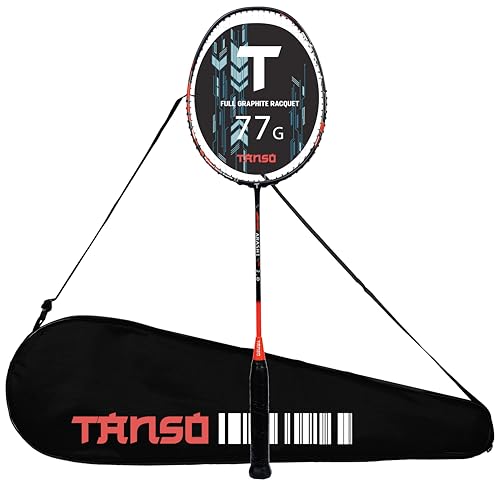
TANSO Arashi 2.0 Full Graphite
₹1,299
A genuine 77 g full-graphite frame, pre-strung and with a cover, carrying 4.6 stars across 1,739 Indian ratings. Nothing else at the price is really graphite.
The winner from each of our four price brackets — with real Amazon.in prices, and an honest account of which listings ship fakes.

The best badminton racket in India for most club players is the Yonex Astrox 88D Game at ₹7,300 — a genuine 4U Namd-shaft attacker with the cleanest durability record in its bracket. On a first-racket budget, the TANSO Arashi 2.0 at ₹1,299 is a real 77 g full-graphite frame with 1,739 Indian ratings behind it. Above ₹10,000 the picture is genuinely poor right now: our ₹10,000–₹20,000 pick, the Victor Jetspeed 10 at ₹11,925, rests on a single verified Indian review, and if you can wait, waiting is the better move.
Badminton is India's biggest racket sport, and that popularity has a cost: it is also the most heavily counterfeited. Fake Yonex, Li-Ning and Victor frames are priced precisely to pass for the real thing, and the problem gets worse as you spend more — above ₹10,000 the two most famous Yonex flagships on Amazon.in both carry recent, recurring reviews describing counterfeits, missing Sunrise holograms and used units in sealed boxes.
So we rate the listing, not just the racket. Several elite models were rejected outright, not because the frame is bad but because that particular listing keeps shipping fakes. Every pick below comes from a listing with a clean recent authenticity record and real Indian owners behind it.
The winner from each of our 4 price brackets. Every one came first in a full head-to-head roundup, not a shortlist.
₹1,299
A genuine 77 g full-graphite frame, pre-strung and with a cover, carrying 4.6 stars across 1,739 Indian ratings. Nothing else at the price is really graphite.

₹2,569
The safest buy in the upgrade bracket: 33 verified Indian reviews with not one frame or shaft failure, a published 30 lb ceiling, and no counterfeit theme at all.

₹7,300
The only racket in its bracket with no frame-breakage reports at all from verified Indian buyers — and it ships strung with a cover, which most frames at this price do not.

₹11,925
PYROFIL carbon and a 6.8 mm shaft at ₹11,925, and the only listing in the flagship band with no breakage report or authenticity complaint against it — but it rests on one verified Indian review, so treat it as unproven.
Scores are not comparable across brackets. Each racket is scored against the others at its own price, so the 9.3 under ₹2,000 and the 7.2 under ₹20,000 are not making the same claim — the first means "outstanding for ₹1,299", the second "the least unproven of five thin options at ₹11,925". The ₹10,000–₹20,000 bracket is in poor health: of 26 rackets screened there on 30 August 2026, half had no verified Indian reviews at all and five had gone out of stock, so its scores sit far below the other brackets on purpose. Prices are what the Amazon.in product pages showed on 30 August 2026.
Each bracket has its own full roundup — every contender scored, specced and priced, with the ones that did not make the cut and why.
Under ₹2,000
First serious rackets and Sunday-morning club players
Where badminton gets real for most Indian players — the racket you graduate to after the set-shuttle bat. A crowded shelf where genuine Made-in-India Yonex sits beside value-brand graphite and tough aluminium beginners' frames, and the listings do everything they can to blur the difference.
Under ₹5,000
Improving players stepping up from a first graphite frame
The upgrade zone — genuine full-carbon frames from Yonex, Li-Ning, Victor and Apacs, with more repulsion, a bigger sweet spot and the ability to take real string tension. It is also where fakes start appearing in volume, so we treated authenticity as a first-class scoring criterion.
Under ₹10,000
Club and academy players who have outgrown their first carbon racket
Everything here is full high-modulus carbon, so the differences are no longer graphite versus aluminium — they are carbon grade, balance, shaft stiffness and tension headroom. This is also where the Yonex "Play / Game / Tour / Pro" tier trap catches the most buyers.
Under ₹20,000
Advanced and competitive players
The flagship tier — the frames the pros actually play, with Namd, PYROFIL and M40X fibres and ultra-slim stiff shafts. It is also the prime hunting ground for high-value counterfeits, and we rejected several famous listings on authenticity alone.
Yonex sells the same flagship name in four tiers, and they are not the same racket. The ladder runs Play, then Game, then Tour, then Pro. An "Astrox 99 Play" at ₹4,003 shares almost nothing with an "Astrox 99 Pro" at ₹19,200 beyond the number on the shaft — different carbon, different shaft, different frame.
This is the single most common way Indian buyers overpay. Read the exact tier word in the listing title before you compare prices, and treat the halo name as telling you nothing on its own. Li-Ning and Victor run similar naming ladders. The gap is easiest to see across two of our brackets: the Play-tier frames wearing flagship names are all in the under ₹5,000 roundup, while the Game- and Tour-tier versions of those same names — a real Astrox 88D Game, a real Arcsaber 11 Tour — only start at the ₹5,000–₹10,000 shelf.
Most sub-₹2,000 frames are rated for roughly 24–30 lbs, and a striking number of one-star reviews describe a racket that snapped after being restrung to 26 lbs or higher. The frame did not fail because it was cheap; it failed because it was strung past its rating.
Unless the listing explicitly states a higher ceiling, keep tension at 22–24 lbs on a budget frame and 24–27 lbs as an intermediate. Higher tension buys control at the cost of power, forgiveness and frame life. Never exceed the stated maximum — on the ultra-slim shafts of flagship frames, that is how the T-joint cracks.
Head-heavy frames put mass behind the head for smash power, and they tire you out over three games. Head-light frames swing fast for defence, net play and doubles. Even-balance frames are the safest choice if you are not sure which you are.
Weight is graded in U, where the number runs backwards: 3U is about 85–89 g, 4U about 80–84 g, 5U under 80 g. 4U is the modern sweet spot for most players. And head-light does not mean light — a head-light 3U frame is still a heavy racket.
Counterfeit badminton rackets are a real and growing problem on Indian marketplaces, and they get more convincing as the price rises. The signals buyers report on fakes are consistent: a missing Yonex/Sunrise hologram or verification sticker, printing that is inverted or blurry, a generic cover instead of the model's own, a country of origin that contradicts the listing, and a weight nowhere near the stated U class.
Weigh it. A 4U racket should be 80–84 g, not 150 g. Check that an "unstrung" listing actually arrived unstrung. Buy from brand-official stores or established specialist sellers where you can, and return immediately if anything is off rather than hoping it plays fine.
Most genuine performance frames above ₹5,000 ship unstrung. Add roughly ₹300–₹800 for a decent string such as Yonex BG65 or BG80, plus labour — which means an unstrung ₹5,500 racket really costs about ₹6,200. Compare like for like before deciding one is cheaper — seven of the ten rackets in our ₹5,000–₹10,000 roundup are sold unstrung, against almost none in the under ₹2,000 roundup.
Grip size is graded in G, and many value brands ship a small G6 that most Indian players find too thin. An overgrip costs ₹50–₹150, builds the handle up and absorbs sweat far better than the stock wrap. Budget it in on day one.
The four brackets below are not simply the same racket at four prices. Each one changes a specific thing, and knowing which thing you are paying for is the difference between a good upgrade and an expensive sideways move.
Under ₹2,000 you are buying material. The jump that matters here is aluminium to full graphite, and it is enormous — roughly 90–95 g of dead, flexy metal against 77–85 g of frame that actually returns energy. Everything else at this price is noise. Once you have a genuine graphite frame, a second ₹1,500 racket from the same shelf will not play meaningfully better.
Under ₹5,000 you are buying tension headroom and consistency. The carbon is better, the frames are rated for higher string tension, and quality control tightens. You can string at 26 lbs without worrying, and two units of the same model will feel the same. This is where most club players should stop.
Under ₹10,000 you are buying balance and shaft precision. High-modulus carbon lets makers build a frame that is simultaneously light, stiff and head-heavy — a combination that is physically impossible lower down. This is the first bracket where head-heavy actually means fast head-heavy rather than just heavy.
Above ₹10,000 you are buying stiffness you have to earn. Flagship shafts only load and release properly with a fast, accurate swing. On a slower swing they feel worse than a ₹5,000 racket, because the frame never flexes enough to help you. This is the one bracket where spending more can genuinely make you play worse.
Listings shout about weight and balance and bury shaft flex, but flex is what decides whether a racket suits your swing. It is usually graded flexible, medium, stiff and extra-stiff, and occasionally given as a millimetre shaft diameter — thinner is generally stiffer.
A flexible shaft bends further and springs back on its own, which adds power to a slower or shorter swing. It is forgiving and it is what most recreational players should be using. A stiff shaft barely bends, so all the power has to come from you — but it returns the shuttle faster and far more predictably when you do supply it.
The failure mode is buying stiff too early. A stiff flagship shaft in the hands of a developing player produces weak clears and a persistent feeling that the racket is fighting back, because it is: the shaft never loads. If your clears are not comfortably reaching the back tramlines, a stiffer racket will not fix that, and it will usually make it worse.
The honest test is your overhead clear. If you can hit a flat clear baseline to baseline without straining, you have the swing speed for a stiff shaft. If you cannot, choose medium flex and spend the difference on stringing and a better shuttle.
Almost every modern frame is isometric — squared off at the top rather than egg-shaped. The reason is geometry: a traditional oval head has main strings of very different lengths, so the usable sweet spot is a narrow band low in the face. Squaring the top evens out those lengths and widens the sweet spot considerably, particularly in the upper half of the face where mishits actually happen.
That matters more than it sounds. The most common recreational mistake is contacting the shuttle above and slightly outside the intended point, and on an oval head that contact is close to dead. The practical consequence is that an isometric budget frame will often feel more powerful than an oval frame that is technically better built.
What isometric does not do is make the sweet spot enormous. It is still roughly the middle third of the face. If you are consistently getting a dull, jarring feel and the shuttle is dropping short, the problem is contact point rather than the racket, and no amount of spending fixes it.
One practical check when buying: a genuine isometric frame has a visibly flat top. Several counterfeit frames we have seen described in Indian reviews copy the paint job but keep a rounded head, which is a useful tell alongside the hologram and the weight.
Badminton grip sizes run G4, G5, G6 and occasionally G7, and like the weight scale the number runs backwards — G4 is the thickest, G6 is thin. Most rackets sold in India ship as G5 or G6, and a great many Indian buyers find the stock handle too thin without ever realising that is what is bothering them.
A handle that is too thin makes you grip harder to keep the racket from turning, and gripping harder is the fastest route to a tired forearm and a blister at the base of the thumb. A handle that is slightly too thick is far less damaging — it mostly costs you a little wrist snap on deceptive shots.
The fix is cheap and reversible. An overgrip costs ₹50–₹150, adds roughly one size, absorbs sweat far better than the factory wrap, and can be re-wrapped in two minutes when it goes slick. A towel grip adds more thickness and absorbs more, at the cost of needing replacement more often. Neither is a compromise — most serious players use one by choice.
Build up rather than down. You can always add an overgrip to a thin handle; you cannot meaningfully shave a thick one. If you are between sizes or buying without handling the racket, take the thinner grip and plan on an overgrip from day one.
Most recreational players in India play far more doubles than singles, and then buy a singles racket because that is what the marketing shows. The two formats reward almost opposite properties.
Doubles is a speed game played at the front and mid-court. Rallies are fast, defensive blocks need to happen in a fraction of a second, and the racket spends most of its time being repositioned rather than swung. A head-light or even-balance frame in 4U or 5U is what you want — it gets to the shuttle in time. A heavy head-heavy frame in doubles feels permanently a beat late.
Singles is an endurance game played to the corners. You have more time to set up, clears and drops need to travel the full length, and the smash is a genuine winner rather than a setup. Head-heavy pays off here, and the extra swing weight costs you less because the rally tempo is lower.
If you play both, buy even-balance in 4U and do not agonise. It is the compromise that neither format punishes, and it is why even-balance frames dominate the mid-brackets. The players who genuinely need a specialised frame already know which one they need.
Tension gets all the attention, but string type changes the feel just as much, and it costs very little to get right. The common choices in India are Yonex BG65 and BG65 Titanium for durability, BG66 Ultimax for repulsion and feel, and BG80 as the power option.
BG65 is the sensible default for anyone below club level: it is thick, it lasts, and it tolerates the mishits that a developing player still produces. BG66 Ultimax is noticeably thinner, gives a crisper sound and better repulsion, and will break sooner — sometimes considerably sooner if you clip the frame. Choosing Ultimax and then being annoyed at restringing every six weeks is a very common and entirely avoidable cycle.
Gauge is the number to look for: roughly 0.70 mm is thick and durable, 0.65 mm and below is thin and lively. Thinner string bites the shuttle more and produces more control and repulsion at the same tension, which is why a well-chosen thin string at 24 lbs can feel better than a thick one at 27 lbs.
Expect ₹300–₹800 for string plus labour at a specialist shop in most Indian cities, and rather less if your club has its own machine. Get it done by someone with a proper electronic tensioner — a drop-weight machine in inexperienced hands is one of the more common reasons a frame arrives back distorted.
The channel you buy through changes your counterfeit risk more than the brand does, and each one fails in a different way.
Marketplace listings — Amazon.in and Flipkart — have the best prices and the widest selection, and carry by far the highest fake risk, because the same listing can be fulfilled by many sellers of varying honesty. The mitigation is specific: buy from the brand's official storefront where one exists, check that the seller name is a recognised sports retailer rather than a generic three-word trading name, and read the most recent reviews rather than the overall star average.
Brand and specialist stores cost more and occasionally run thin on stock, but the authenticity question largely disappears and you can usually get the racket strung to your tension before it ships. For anything above ₹5,000, the premium is often smaller than the cost of one counterfeit.
Local sports shops let you hold the racket, which is genuinely valuable for judging balance and grip size, and many will string it for you on the spot. Their weakness is range and price — they stock what turns over, so the specific tier you want may not be there, and you will pay close to list.
Whatever the channel, keep the packaging until you have weighed the racket and checked the hologram. A return in the first 48 hours is straightforward everywhere; a return in week three rarely is.
A genuine graphite frame that is strung within its rating and not clashed against a partner's racket will last years of recreational play. Frames do not wear out from hitting shuttles. They fail from three things, in this order: over-tensioning, clashes, and being stored badly.
Over-tensioning is the big one, and it is cumulative. A frame strung repeatedly at or above its ceiling develops stress at the T-joint and at the 10 and 2 o'clock positions on the head, and then breaks on an ordinary shot months later. The player blames the shot; the cause was three restrings ago.
Clashes are unavoidable in doubles and mostly survivable, but a hard frame-to-frame clash can crack the paint and start a fracture you will not notice until the frame gives. Inspect the head after any clash that made a loud crack rather than a click.
Storage matters more in India than most guides admit. A racket left in a car boot through a Delhi or Chennai summer is sitting at temperatures that soften epoxy and slacken string tension permanently. Keep it indoors, keep it in its cover, and do not leave it strung at high tension for months without playing — tension bleeds off anyway, and the frame is under load the whole time.
The instinct is to buy something cheap and indestructible, and for a genuine beginner that instinct is half right. The half that is wrong is weight.
For children under roughly twelve, weight is the only spec that matters much. A 5U or 6U frame at 75–79 g, or a shorter junior racket, lets a child actually complete a swing. A standard 85 g adult frame forces them to compensate with a chopping arm action that is then very hard to unlearn. Aluminium is acceptable here precisely because it survives being dropped, trodden on and used as a cricket bat.
For an adult beginner who intends to keep playing, skip aluminium. A genuine full-graphite frame at ₹1,300–₹2,000 is cheap enough that the durability argument no longer holds, and the difference in how the shuttle comes off the strings is large enough to affect whether the sport is enjoyable at all. Pre-strung is fine and preferable — you do not yet know what tension you want.
What not to buy is the ₹500 two-racket set sold with plastic shuttles. Those frames are heavy, dead and usually genuinely unpleasant to hit with, and they put more people off badminton than any other single product in the Indian market.
A ₹7,000 racket paired with the wrong shuttle plays worse than a ₹2,000 racket with the right one, and shuttles are where Indian club players most often make a false economy.
Feather shuttles fly true, decelerate properly at the back of the court and are what every competitive match uses. They also break — a tube of good feathers may not survive a long evening of hard hitting, which is why the running cost bothers people. Nylon shuttles last enormously longer and cost far less per session, at the price of a flatter flight and a duller feel, and they behave differently enough that switching between them mid-training is genuinely confusing.
The practical answer for most Indian clubs is nylon for casual and practice play, feather for anything that matters. What does not work is buying cheap feathers: a low-grade feather shuttle combines the fragility of feathers with a flight not much better than nylon.
Speed matters too and is widely ignored. Shuttles are graded by speed number, and the correct one depends on temperature and altitude. The same shuttle that flies correctly in an air-conditioned Bengaluru hall will sail long in humid coastal heat. If every clear is going out, try a slower shuttle before you change anything about your racket or your technique.
The most common upgrade in Indian badminton is a player moving from a ₹2,000 frame to a ₹7,000 frame because their game has plateaued. About half the time the plateau had nothing to do with the racket.
There are three honest signals that the racket is genuinely holding you back. The first is that you have the swing speed for more stiffness — your clears reach the back comfortably and you want a faster, more predictable response. The second is that you are hitting the tension ceiling: you want 27 lbs and the frame is rated for 24. The third is that the racket physically cannot do what your game now needs — you have developed a real smash and a flexible even-balance frame is muting it.
The signals that are not about the racket: inconsistent clears, poor net play, getting tired in the third game, and losing to people you used to beat. Those are footwork, fitness and contact point, and a stiffer racket will make every one of them slightly worse.
If you are unsure, restring first. A fresh string job at the right tension on your existing frame costs ₹300–₹800 and transforms how a racket feels far more than most players expect — a frame that has been strung for a year has lost a meaningful share of its tension and most of its crispness. A surprising number of players who were about to spend ₹7,000 find that ₹500 was the actual answer.
Reading through the verified Indian reviews across all four of our brackets, the same handful of avoidable mistakes account for most of the disappointed buyers.
Buying on the flagship number alone, without reading the tier word, is the biggest one by volume — an Astrox 99 Play and an Astrox 99 Pro are not variants of one racket. Stringing a budget frame past its rating is the biggest by cost, because it destroys the racket outright. Trusting the global star average on a listing where almost all reviews come from outside India is the most insidious, because the number looks reassuring right up until the racket arrives.
Two more are specific to how badminton is sold here. Assuming a performance racket ships strung — most above ₹5,000 do not, and the unstrung price is not the real price. And buying an "unstrung" frame that arrives strung, which sounds like a bonus and is in fact one of the more reliable counterfeit signals.
None of these require expertise to avoid. They require reading the listing title word by word, filtering the reviews to India, and weighing the racket when it arrives.
Badminton listings in India are written to be skimmed, and skimming them is how people buy the wrong racket. There are five things worth reading carefully, and they take about ninety seconds in total.
Start with the full title, word by word. The tier word (Play, Game, Tour, Pro), the U class and the G grip size are usually all in there, and all three are routinely missed. A title reading "Astrox 99 Play 4U G5 Strung" is telling you almost everything you need — most buyers read only "Astrox 99".
Then the seller name and the fulfilment line. A brand-official storefront or a recognised sports retailer is a different risk proposition from a generic trading name you have never heard of, even at the identical price.
Then the strung or unstrung status, because it changes the real price by ₹300–₹800 and because a mismatch between what the listing says and what arrives is a counterfeit signal in its own right.
Then the technical specification table, where the maximum string tension usually lives. If the listing does not state a tension ceiling anywhere, assume it is low and string conservatively.
Finally, the reviews filtered to India, sorted by most recent. The overall star average includes buyers in every market and can be years out of date; the recent Indian reviews are where counterfeit waves, batch problems and seller changes actually show up. On several famous listings those two views tell completely different stories.
The U scale is the spec buyers quote most and understand least, partly because the numbers run backwards and partly because the differences sound trivial written down. They are not trivial in play.
2U (90–94 g) is now rare and specialist — heavy frames for players who want maximum mass behind a smash and have the strength and technique to swing one all evening. 3U (85–89 g) was the standard for a generation and is still common: stable, powerful, and noticeably tiring in fast doubles. 4U (80–84 g) is the modern default and the right answer for most Indian club players — enough mass to stay stable through the shot, light enough to reposition quickly. 5U (75–79 g) and lighter suits juniors, fast doubles specialists and players returning from injury.
A five-gram step sounds like nothing and is immediately obvious across a three-game evening. The relevant quantity is not the total weight but the swing weight — how far that mass sits from your hand — which is why a head-light 3U can feel quicker than a head-heavy 4U despite being heavier on the scales.
This is also the most useful authenticity check available to an ordinary buyer. Kitchen scales are accurate enough. A frame sold as 4U should land between 80 and 84 g unstrung, and a meaningful number of counterfeits reported by Indian buyers arrive dramatically outside their stated class — sometimes at 150 g, which is not a manufacturing tolerance but a different object entirely.
Badminton racket warranties in India cover manufacturing defects and essentially nothing else, and the gap between what buyers expect and what is covered causes a great deal of frustration.
A genuine manufacturing defect — a shaft that separates at the T-joint without impact, a grommet strip that was never seated, a frame that arrives already out of true — is usually honoured by brand-authorised sellers without much argument, provided you report it quickly and have the invoice. What is not covered, anywhere, is a frame that broke because it was strung above its rated tension, a frame damaged in a clash, or a frame that cracked after being dropped. Those are the overwhelming majority of real-world breakages.
This is why the purchase channel matters again. A brand-official store or specialist retailer will process a defect claim; a marketplace seller with a generic name frequently will not respond at all, and the marketplace return window is then your only protection. That window is short, which is the practical argument for inspecting and weighing a racket the day it arrives rather than the weekend you next play.
Keep the invoice and the cover. Claims are routinely refused for want of proof of purchase, and on a ₹7,000 frame that is an expensive filing error.
Most badminton buying advice is written for air-conditioned European halls. A great deal of Indian badminton is played in heat and humidity that materially changes how equipment behaves, and a few choices follow directly from that.
Sweat is the dominant variable. A stock factory grip goes slick within twenty minutes in a humid coastal hall, and a slick handle makes you grip harder, which tires the forearm and ruins deceptive shots. A towelling overgrip is genuinely the right answer in Chennai, Kochi or Kolkata in a way it is not in Delhi in January, and it is a ₹100 decision that affects every session.
Shuttle speed shifts with air density. Hot, humid air is less dense and shuttles fly further. The same speed-grade shuttle that is perfect in an air-conditioned hall will sail long outdoors in April. If your clears keep drifting out, change the shuttle speed grade before you change your racket or rebuild your swing.
Heat is hard on frames and strings. Tension drops faster in heat, and a racket stored in a car boot or on a sun-facing balcony is effectively being cooked. Epoxy softens, tension bleeds, and the frame quietly loses the crispness the owner paid for.
Dust and grit matter outdoors. Outdoor and semi-open courts put fine grit into the grommets and against the string bed, which accelerates string wear considerably. If you play outdoors regularly, choose the thicker, more durable string and accept slightly less feel — the alternative is restringing monthly.
This sits oddly on a racket page, and it is the single piece of advice most likely to be worth money to a reader deciding between a ₹3,000 and a ₹7,000 frame.
Badminton is a lunging, stopping, lateral sport played on a court with essentially no give. Court shoes are built with gum soles for grip on wooden and synthetic courts, reinforced lateral support for side-to-side loading, and cushioning placed for landing from a jump smash. Running shoes are built for forward motion and have raised heels, soft foam and no lateral support at all — which is why ankle rolls in recreational badminton are so common, and why the injury is usually blamed on the court.
The performance argument is as strong as the safety one. Confident footwork depends on trusting that your foot will stop where you put it. On running shoes on a polished court it will not, so players unconsciously shorten their lunge and arrive at the shuttle late and off balance — which then looks like a racket problem, or a fitness problem, and is neither.
A competent pair of badminton court shoes starts around ₹2,500–₹3,500 in India. If the choice is between that and stepping up a racket bracket, the shoes will do more for a developing player almost every time. Non-marking soles are also a hard requirement at most Indian indoor venues, so it is frequently not optional anyway.
There is a real market in used and parallel-imported badminton rackets in India, and it is not automatically a bad place to buy — but the risks are specific and worth naming.
Genuinely used frames from a known player are often the best value available. A two-year-old flagship that has been strung sensibly and not clashed is close to as good as new, and it will sell for a third of retail. Inspect the head at the 10 and 2 o'clock positions and the T-joint for hairline cracks or paint lifting, check the frame is not visibly out of true, and treat any reluctance to let you examine it as an answer in itself.
Grey or parallel imports — genuine stock brought in outside official distribution — are typically real rackets with no Indian warranty. That is a reasonable trade if the discount is large and you understand that a defect claim will go nowhere. It is a poor trade at a small discount, which is how they are usually priced.
"Export surplus" and "factory second" are the phrases to be most careful with. Sometimes they describe genuine cosmetic rejects. Frequently they are simply the vocabulary counterfeits are sold in, because the phrase pre-explains why the hologram is missing, the cover is generic and the printing is imperfect. If the explanation for every authenticity red flag is contained in the product description, that is not reassurance.
For a first racket, buy new. The money at stake is small, and a beginner has no baseline to judge whether a second-hand frame is behaving oddly.
When a genuine Yonex or Li-Ning frame breaks within weeks of normal play at a sane tension, the most likely explanation is not that the model is fragile — it is that the unit was counterfeit. Genuine flagship frames have long track records precisely because they do not do this. Before you write off a model, check whether the other one-star reviews on that listing describe the same thing, and whether any of them mention a missing hologram.
Amazon.in shows a global average. A racket can display thousands of ratings and have almost none from India, and the unit sold here often comes from a different importer and a different batch. Filter the reviews to India before you trust the number — on some famous listings, the Indian reviews tell a completely different story from the headline stars.
Pre-strung frames under ₹2,000 ship with basic string at a conservative tension, and it is almost always the first thing to go — many buyers restring within weeks. That is normal and not a defect. Treat the stock string as a way to start playing immediately, and plan a restring at ₹200–₹500 once you know what tension suits you.
This is the most expensive misdiagnosis in club badminton. Stiff shafts only return energy when you load them with a fast, accurate swing; on a developing swing they never flex enough to help, so clears get shorter and the racket feels dead. If your clears are not reliably reaching the back tramlines, the honest answer is that a more flexible frame will serve you better than a more expensive one — and that the actual fix is contact point and footwork, neither of which is for sale.
Strings lose tension continuously from the moment they are fitted, and a racket strung a year ago is meaningfully slacker than it was even if it has sat in its cover untouched. Players routinely interpret that gradual deadening as the frame wearing out and go shopping. Restring first: ₹300–₹800 will tell you whether you actually needed a new racket, and a surprising share of the time the answer is no.
Genuine performance frames above ₹5,000 are overwhelmingly sold unstrung, because the buyer is expected to choose string and tension. A unit that arrives already strung when the listing said unstrung is one of the more consistent counterfeit signals reported by Indian buyers — often alongside a generic cover and a weight that does not match the stated U class. Weigh it and check the hologram before you play with it, because once it is used the return gets much harder.
In-depth guides to help you pick the right racket and understand the specs.
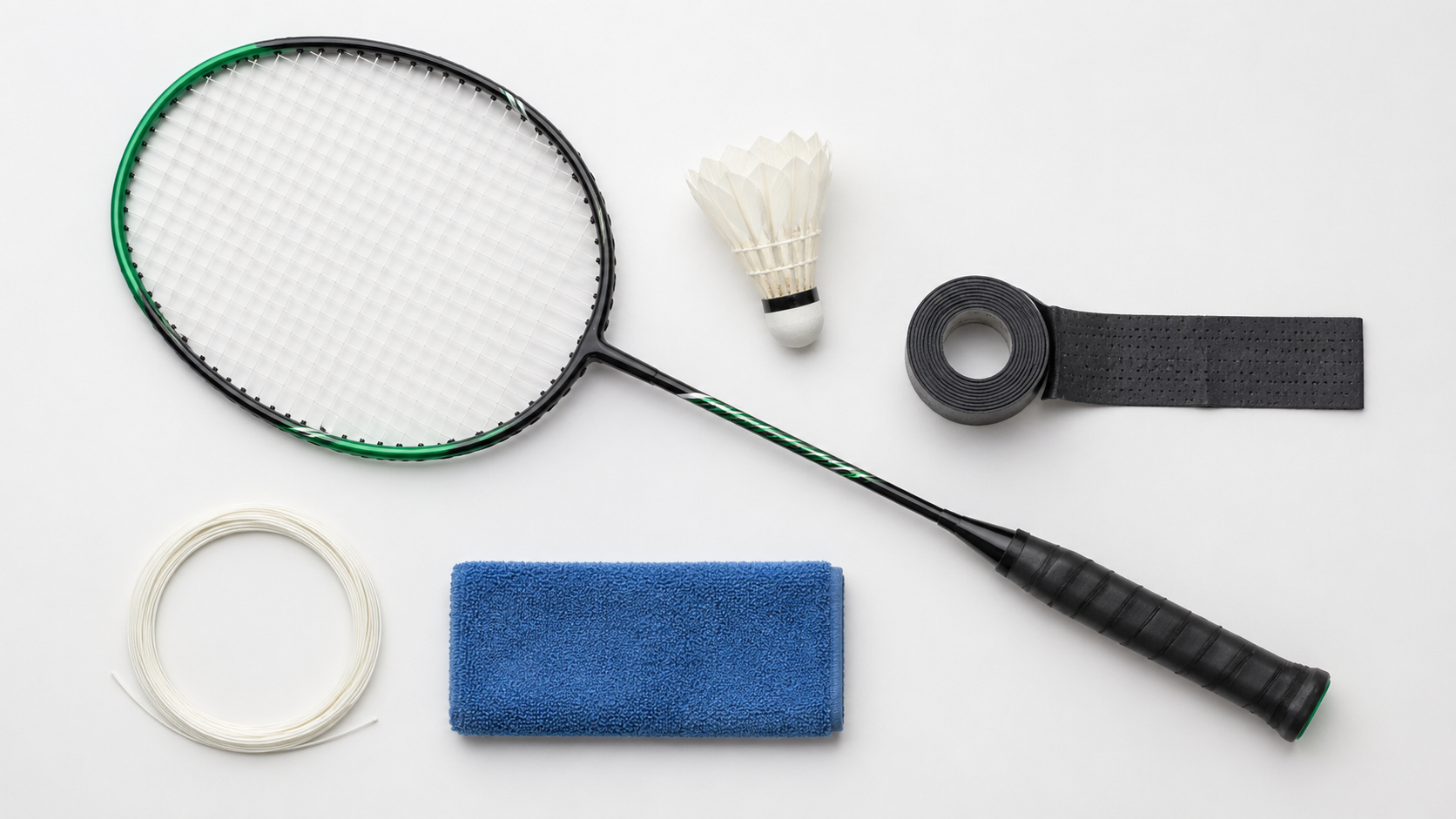
How to Choose a Badminton Racket
Weight, balance, shaft flex, string tension and grip size explained.
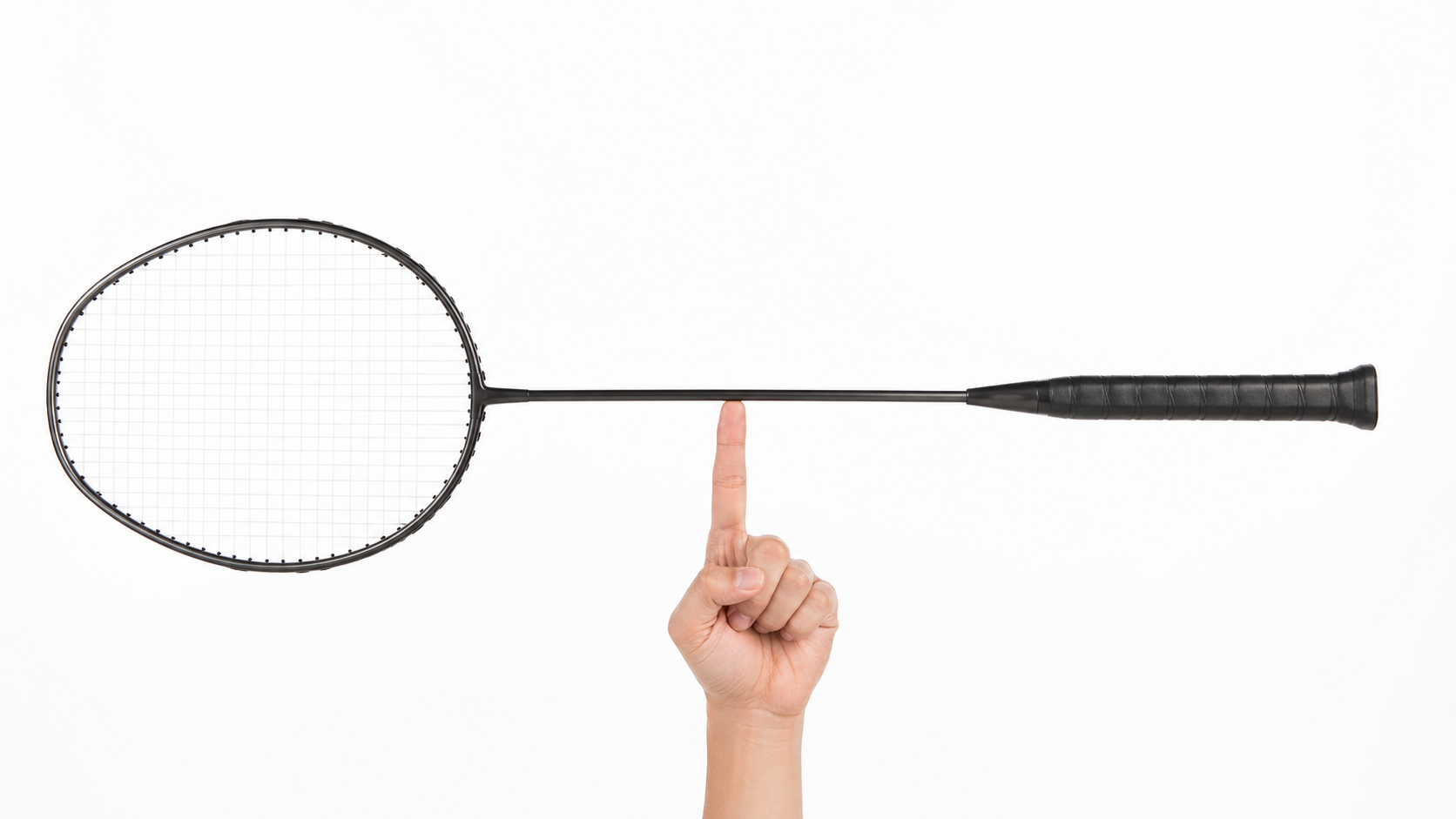
Badminton Racket Weight Guide
What 2U to 6U actually means, and which class fits your game.
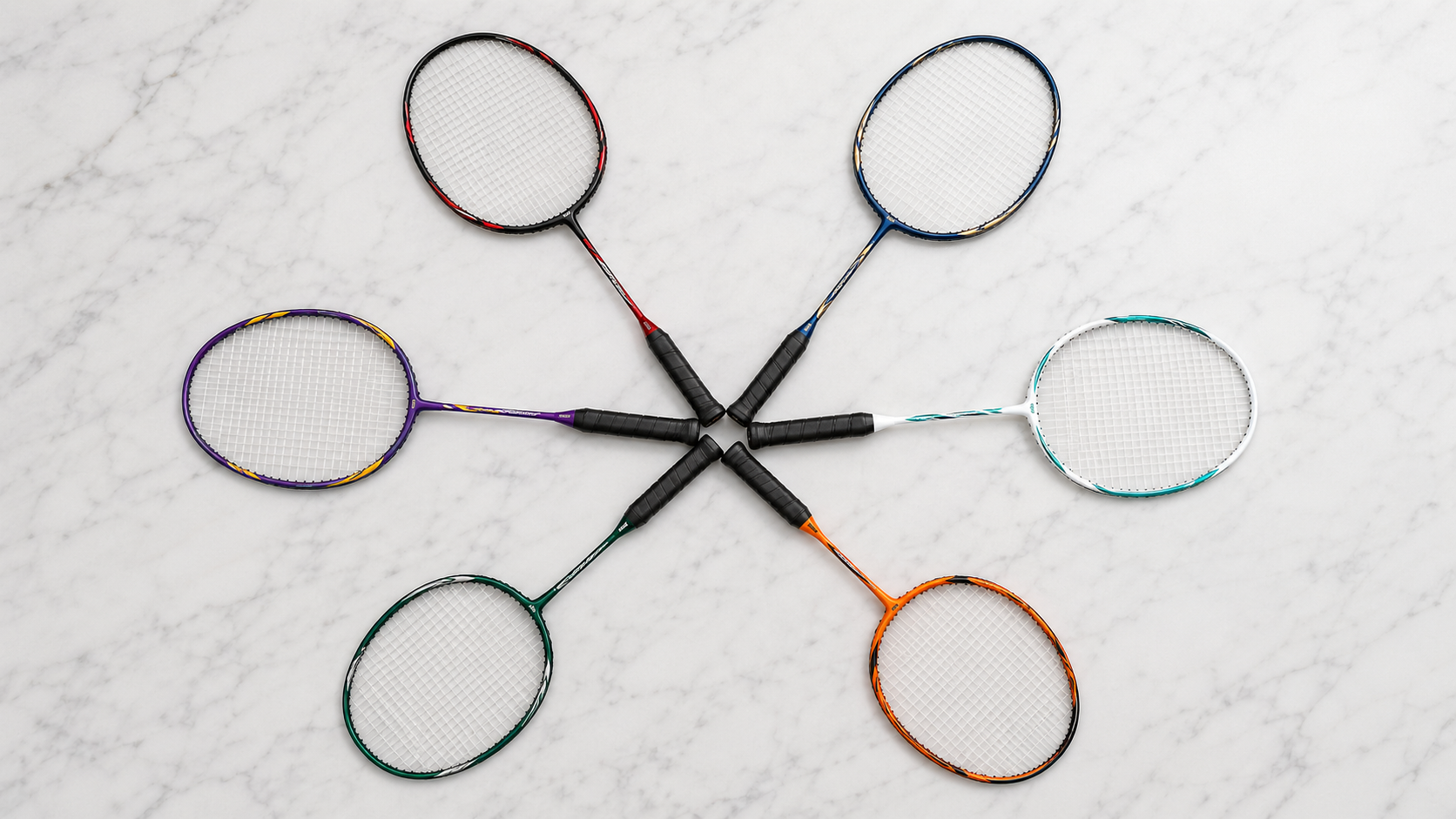
Best Badminton Brands in India
Yonex, Li-Ning, Victor, Apacs and the Indian challengers compared.
Yonex vs Li-Ning
Two dominant brands compared on build, price and Indian availability.
Roundups outside the racket price brackets above.
We compared 10 nylon badminton shuttlecocks across budget to premium. Here are the 8 best picks with scores, specs, pros/cons, and real Amazon prices.
Top Pick
Yonex Mavis 350 Green Cap Nylon Shuttlecock · ₹1,179
We compared 10 feather badminton shuttlecocks in India, from budget duck feather to BWF-approved goose feather. Our 8 best picks with scores, specs, and prices.
Top Pick
Yonex Aerosensa 50 Feather Shuttlecock · ₹6,999
We don't run paid placements and we don't accept free products. Every pick on this page comes from a roundup where we compared the full field on manufacturer specifications, independent expert reviews, and the verified buyer feedback left by Indian customers — weighting Indian evidence heavily and discounting star ratings built on buyers in other markets.