
Best under ₹5,000 7.8
TANSO TSUYO 44 Full Graphite
₹2,999
Genuinely full graphite under ₹3,000, made in India, and the only racket in its bracket whose review base is entirely Indian.
The winner from each of our three price brackets, scored on the reviews Indian buyers actually left — with real Amazon.in prices and an honest note on what each bracket is worth.

The best tennis racket in India for a club player who has outgrown a starter frame is the HEAD Radical Pro 2023 at ₹19,089 — a 98 sq in, 315 g graphite frame with genuine performance specs. For a first serious racket, the TANSO TSUYO 44 at ₹2,999 is the only genuinely full-graphite frame we found under ₹3,000. In between, the Yonex V CORE ACE at ₹6,899 is the pick of a thin bracket — the one racket in it an Indian buyer has vouched for this year.
Indian tennis runs almost entirely on hard courts, and it is bought almost entirely online — which makes the listing, not the shop assistant, the thing standing between you and a bad racket. That shelf is noisy. "Graphite", "composite" and "titanium" get used loosely; a cover promised in the title arrives as a half cover or not at all; and a confident four-star average can rest almost entirely on buyers in the United States and Mexico who bought at a different price, from a different seller, with a different frame inside the box.
So we score on the verified Indian reviews specifically, and we discount star ratings built on foreign buyers. That is why the numbers below run lower than you may be used to seeing, and why they run lowest exactly where the evidence is thinnest — the ₹5,000–₹10,000 band, which is the quietest shelf in Indian tennis.
The winner from each of our 3 price brackets. Every one came first in a full head-to-head roundup, not a shortlist.
₹2,999
Genuinely full graphite under ₹3,000, made in India, and the only racket in its bracket whose review base is entirely Indian.

₹6,899
Imported by Sunrise Sports and the only racket in its band an Indian buyer has vouched for this year. A low bar, and it still clears it first.

₹19,089
The only frame here with real performance specs — 98 sq in, 315 g strung, 16x19, Auxetic and Graphene Inside — rather than beginner geometry at a serious price.
Scores are not comparable across brackets. Each racket is scored against the others at its own price, so the 7.8 under ₹5,000 and the 9.4 under ₹20,000 are not making the same claim — the first means "good for ₹3,000", the second means "good for ₹19,000". A low score here reflects a weak bracket, not a bad pick: the ₹5,000–₹10,000 band scores lowest because almost nothing in it has been reviewed by an Indian buyer. Prices are what the Amazon.in product pages showed on 29 August 2026.
Each bracket has its own full roundup — every contender scored, specced and priced, with the ones that did not make the cut and why.
Under ₹5,000
Beginners, school players, and first serious rackets
This is where the decision actually gets made — enough money to escape toy-grade aluminium and reach real graphite feel, without paying for a pro frame you cannot yet use. It is also the noisiest bracket on Amazon.in, and the one where frame material claims most often fail to survive contact with the box.
Under ₹10,000
Improving club players looking to graduate
The quietest shelf in Indian tennis. Serious players either shop below ₹5,000 for a knockabout frame or walk into a specialist store for a performance one, which leaves this bracket stocked with foreign-market listings almost no local buyer has tested. We started with 47 listings and finished with 8.
Under ₹20,000
Competitive club players and coached juniors
Where tennis rackets stop being sporting goods and start being equipment: graphite composites, titanium blends, and frames that survive competitive play and coaching sessions on Indian hard courts. Fewer options, but the spec sheets finally mean something.
Head size is the area of the string bed in square inches, and it is the spec that most changes how a racket feels in your first month. A 105–115 sq in oversize head gives you a large sweet spot that forgives off-centre hits, which is exactly what a beginner needs and exactly what an improving player eventually outgrows.
A 98–100 sq in midplus head asks you to find the middle of the string bed on your own and rewards you with control when you do. If you are buying your first racket, start at 100–110 sq in. If you already rally consistently and want the ball to go where you aimed it, drop to 98–100.
The "Item Weight" field on an Amazon listing is the shipping weight of the parcel — racket, cover, cardboard and all. It routinely reads 400–600 g for a racket that actually weighs 270 g, and it is the single most common reason Indian buyers end up with a frame far heavier or lighter than they expected.
The real number lives in the product bullets or the title. Beginners want 260–285 g unstrung; club players usually settle between 285 g and 310 g. And a head-light racket is not a lighter racket — balance describes where the mass sits, not how much of it there is.
Full graphite, graphite composite, titanium-graphite and aluminium all appear on Indian listings, and the words are used far more loosely than the price differences suggest. A frame described as "graphite" in the title is often an aluminium-graphite composite in the spec table and plain alloy in the buyer photos — three answers on one page.
The practical test is consistency: read the material claim in the title, the spec table and the bullets, and treat any disagreement as a reason to look elsewhere. Below ₹3,000, assume aluminium unless an Indian buyer has confirmed otherwise after opening the box.
Almost every other mistake on this page is survivable. A grip that is too large forces you to squeeze harder to stop the racket twisting, which is a direct route to tennis elbow; one that is too small does the same by a different path. Most adult Indian players land on 4 1/4 (G2) or 4 3/8 (G3).
You can build a small grip up with an overgrip for about ₹150. You cannot shrink one down. When you are between sizes, take the smaller one.
HEAD and Wilson dominate Indian tennis retail, and at ₹10,000 and up that reputation is largely earned. Below ₹5,000 it buys you much less than the price gap implies — the same factories, the same composites, and in HEAD's budget range a two-piece jointed frame that Indian buyers report cracking at the throat.
Almost nothing in Indian tennis retail carries a warranty at any price, including the famous names. Price that in before you pay for the logo.
The three brackets below do not sell you the same racket at three prices. Each changes a specific thing, and Indian tennis has an unusually sharp discontinuity in the middle of the range.
Under ₹5,000 you are buying material honesty. Almost everything on this shelf is aluminium or an aluminium–graphite composite wearing the word "graphite" loosely, and the single question worth answering is whether the frame is genuinely full graphite. A real graphite frame here is lighter, stiffer in the right places and vastly less dead than the alloy frames beside it. Beyond that, specs on this shelf are approximate and should be treated as such.
Under ₹10,000 is, bluntly, the weakest shelf in Indian tennis. It is quiet, thinly reviewed and full of frames that are neither honest beginner rackets nor real performance frames. You are mostly paying for a recognisable brand on geometry that has not changed much from the bracket below. If your budget lands here and you are not in a hurry, saving toward the next bracket is usually the better move.
Above ₹10,000 you are buying genuine performance geometry — a 95–100 sq in head, 300 g or more strung, a real string pattern and a frame designed for a player who generates their own pace. This is the first bracket where the specification in the listing describes an actual design intent rather than a marketing position. It is also the first bracket where the racket can be too much for you, which is the subject of the next section.
Tennis differs from badminton here in a way that costs Indian buyers real money. In badminton, spending more mostly gets you a better version of the same thing. In tennis, spending more gets you a frame designed for a fundamentally different player — and if you are not that player yet, it will make you worse.
A performance frame is heavy (300–320 g strung), relatively head-light, small-headed (95–98 sq in) and low-powered by design. That combination gives a strong player control, stability against pace, and the ability to swing fast without the ball flying long. Handed to a developing player with a shorter, slower swing, the same frame produces balls that land short, a shoulder that aches by the second set, and a persistent sense that the racket is heavy and dead. It is. That is what it is for.
The honest self-assessment is about swing length and pace. If you take a full, accelerating swing and your groundstrokes routinely land deep, a heavier control frame will reward you. If you are still shortening your swing, blocking returns, or playing mostly doubles at a social pace, a lighter 100–105 sq in frame at 260–285 g will produce better tennis and less pain.
There is no shame ladder here. A very large share of competent Indian club players are best served by a light, forgiving frame permanently, and the main thing that changes with improvement is string and tension rather than the racket itself.
The two numbers in a spec line such as "98 sq in, 16x19" are the count of main strings running up the frame and cross strings running across it. The difference between an open 16x19 and a dense 18x20 changes how the racket plays more than a 10 g weight difference does, and it is almost never explained in Indian listings.
An open pattern (16x19) has fewer, more widely spaced strings. They deflect more on contact and snap back harder, which grips the ball and generates noticeably more spin. It is also more powerful and more forgiving, and it eats strings faster — the same movement that generates spin saws the strings against each other. This is the pattern most club players should want, and it is what the majority of modern frames ship with.
A dense pattern (18x20) deflects less, giving a flatter, more predictable, more controlled ball with a distinctly firmer feel. It suits players who already generate their own spin and pace and want the ball to go exactly where they aimed. It is less forgiving on off-centre hits and strings last considerably longer.
The practical rule: if you are working on heavy topspin groundstrokes, or you play on the gritty hard courts common in India where a spin-friendly ball helps, choose 16x19. Choose 18x20 only if you are hitting flat and long and want the racket to rein you in. Buying an 18x20 because it sounds more advanced is one of the more common ways to make a racket feel unhelpful.
In tennis, unlike badminton, the string is genuinely half the racket — and it is the half Indian club players most often ignore entirely, playing for years on whatever the frame shipped with.
Synthetic gut is the sensible default for most recreational players: cheap, comfortable, reasonably powerful, and it plays acceptably until it breaks. Multifilament costs more and is the most comfortable option available, which matters a great deal if you have any elbow or shoulder trouble — it is the string to choose if tennis elbow is a live concern. Polyester (poly) is stiff, low-powered, extremely spin-friendly and control-oriented; it is what most competitive players use and it is genuinely unsuitable for a developing player, because its stiffness transmits shock straight into the arm and it goes dead long before it breaks.
The mistake that produces the most injuries in club tennis is a player copying a professional's poly setup without the swing to use it. Poly only comes alive under a fast, heavy swing; below that it is a stiff, punishing string that offers nothing in return.
Tension is the cheap adjustment nobody uses. Lower tension (around 48–52 lbs) gives more power, more comfort and a larger effective sweet spot. Higher tension (54–60 lbs) gives more control and a firmer response. Dropping two pounds is free at your next restring and frequently fixes a racket that feels harsh, and the same frame at 50 lbs and 58 lbs genuinely plays like two rackets.
Budget ₹600–₹1,500 for string and labour in most Indian cities. A frame strung a year ago has lost meaningful tension and most of its liveliness, and restringing is the first thing to try before concluding you need a new racket.
Two rackets that both read 300 g on the listing can feel completely different, and the reason is where that mass sits. Static weight is what the scale says. Swingweight is how heavy the racket feels when you actually swing it, and it is governed by how far the mass is from your hand.
A head-heavy 285 g frame can feel more demanding through a rally than a head-light 305 g one, because the mass is further out and you are accelerating a longer lever. This is why players sometimes buy a lighter racket to reduce fatigue and find it more tiring, not less — they reduced static weight and increased swingweight at the same time.
Balance is usually quoted in points head-light (HL) or head-heavy (HH), or as a millimetre figure from the butt cap. Performance frames are generally head-light, which lets them be genuinely heavy without being unwieldy — mass near the hand adds stability against an incoming ball without slowing your swing much. Light beginner frames are often head-heavy to give them some plough-through despite having little mass overall.
Very few Indian listings quote swingweight, which makes this hard to shop for directly. The usable proxy: for a given weight, head-light will feel faster and more manoeuvrable, and head-heavy will feel more powerful and more tiring. If you can hold the racket before buying, balance it on one finger at the midpoint — where it sits tells you more in two seconds than the spec table will.
The beam is the thickness of the frame seen edge-on, usually quoted in millimetres and sometimes as a range such as 23–26–22 mm for the thickness at three points. Alongside it sits stiffness, quoted as an RA number when anyone bothers to quote it at all. Together they decide how much the frame flexes on contact, and therefore how much shock reaches your arm.
A thick, stiff beam (26 mm and up, high RA) barely bends, so more of the ball's energy goes back into the ball. That means free power, which is why beginner and "game improvement" frames are built this way. The cost is that a stiff frame also transmits more shock to the wrist and elbow, and gives a duller, less informative feel.
A thin, flexible beam (22 mm or less, low RA) absorbs more of the impact, which means less free power, better feel and noticeably more comfort. Almost every frame used at a serious level is relatively flexible, and the reason is as much arm health over thousands of balls as it is control.
This matters in India specifically because the combination that causes the most tennis elbow — a stiff frame, a poly string and a short swing — is exactly the combination a budget-conscious improving player tends to arrive at by accident. If your arm hurts after playing, the frame stiffness and the string are the first two things to change, and the string is the cheaper experiment.
Indian tennis is played overwhelmingly on hard courts — often outdoors, often abrasive, often hot. That has consequences that European and American buying guides rarely account for.
Strings wear faster. A gritty outdoor hard court leaves fine abrasive dust on the ball, which then saws through the string bed. Expect to restring more often than the textbook advice suggests, and factor that running cost in when choosing between a durable synthetic gut and a livelier but fragile multifilament.
Balls die quickly. Pressurised balls lose their bounce on abrasive courts within a few hard sessions, and playing on dead balls is a genuinely bad habit — it teaches you to over-hit. Extra-duty felt lasts meaningfully longer on Indian hard courts than regular duty, and the price difference is small.
Shoes are consumable. Hard-court outsoles are the specific thing that abrasive Indian courts destroy, and a worn outsole is both slower and a genuine ankle risk. Buy hard-court shoes rather than all-court or clay, and treat them as something that wears out rather than something that lasts.
Heat affects everything. Strings lose tension faster in heat, grips go slick within a set, and a racket left in a car boot through an Indian summer is being slowly cooked. Keep a spare overgrip in the bag and the racket out of direct sun.
Junior tennis rackets are sized by length in inches, and getting the size right matters far more than the brand or the material. A racket that is too long or too heavy forces a child into a two-handed, arm-led swing that takes years to correct.
The rough ladder runs: 19 inches for ages 3–5, 21 inches for 5–6, 23 inches for 6–8, 25 inches for 8–10, and 26 inches for 9–11, after which most players move to a light adult 27-inch frame. Height matters more than age, and the quick physical check is to have the child stand holding the racket down by their side — the head should clear the floor by roughly two to three centimetres.
Weight is the constraint that gets ignored. Junior frames should be genuinely light, because a child cannot compensate for mass with technique. Aluminium is entirely reasonable at this stage, since the frame will be outgrown long before it wears out and will meanwhile be dropped, thrown and left in the sun.
Do not buy a size up for the child to grow into. It is the single most common junior tennis buying mistake, and unlike clothing it does real technical damage — the child adapts their swing to the oversized racket, and that adaptation outlasts the racket by years.
Indian tennis is bought almost entirely online, which means most buyers never hold the racket before paying. Demo programmes of the kind common in Europe and the United States barely exist here. A few things reduce the risk.
Prioritise the specs you cannot change over the ones you can. Head size, weight, balance and string pattern are fixed for the life of the frame. Grip size can be built up with an overgrip, string and tension are entirely changeable, and a dampener costs ₹100. Spend your decision-making effort on the first group.
Use clubs and coaching centres as an informal demo programme. Most Indian clubs have a stock of members' rackets, and most players will happily let you hit a few balls with theirs. Ten minutes with a frame tells you more than any specification table, and it is the only realistic way to learn whether you actually like a heavier control racket before buying one.
Read the return policy before, not after. Marketplace return windows are short and typically require the racket to be unused. That is in tension with the only real way to evaluate it, so inspect thoroughly on arrival — weight, grip size, head size, whether the promised cover is there and whether it is a full cover or a half cover — and decide quickly.
Treat the first racket as a learning purchase. Almost nobody gets it exactly right without hitting with something first, which is an argument for spending less at the start rather than more.
Three inexpensive items make a disproportionate difference to how a tennis racket plays and feels, and all three are routinely skipped.
An overgrip (₹100–₹250) adds tack, absorbs sweat and lets you adjust handle thickness. In Indian heat the stock grip goes slick quickly, and a slick handle makes you squeeze harder — which is both tiring and a contributor to elbow trouble. Replace it when it stops feeling tacky, not when it falls apart.
A vibration dampener (₹100–₹200) removes the high-pitched ping from the string bed. It does not meaningfully reduce the shock that reaches your arm, whatever the packaging implies, but it changes the sound and feel enough that many players find the racket more comfortable, and it costs nothing to try.
Fresh string (₹600–₹1,500) is the big one. The rule of thumb is to restring as many times a year as you play per week — twice a week means twice a year, minimum. Strings do not have to break to be finished; they go dead and lose tension steadily, and most club players are playing on strings well past their useful life without realising the racket used to feel better.
Between them these cost less than a tenth of a performance frame and will do more for most players than moving up a price bracket.
Across the three brackets, the disappointed buyers cluster around a short list of avoidable errors.
Trusting the word "graphite" in a sub-₹5,000 listing is the most common. It is used to describe frames that are predominantly aluminium, and the specification tables that would settle the question are often absent or wrong. Trusting the global star average is the most misleading, because a confident four-star rating can rest almost entirely on buyers in other markets who bought a different unit at a different price.
Reading weight from the "Item Weight" field is a specifically Indian-marketplace problem: that field frequently reports shipping weight including packaging, not the racket. Buying a heavy control frame as an aspirational upgrade is the most expensive, because the racket is not defective — it is simply built for a player with a longer, faster swing.
And assuming a cover is included because the title mentions one is the most persistent small annoyance. Covers promised in listings arrive as half covers or not at all often enough that it is worth reading the recent Indian reviews specifically for it.
Three things about how you actually play should feed into the racket you buy, and none of them appear in any listing.
If you play mostly doubles — and most Indian club tennis is doubles — you are playing a reaction game at the net with a lot of blocked volleys and comparatively few full-swing groundstrokes. That favours a slightly lighter, more manoeuvrable frame with a head-light balance, because racket-head speed at the net matters more than plough-through from the baseline. A heavy control frame is at its least useful in exactly this situation.
If you play mostly singles, you are hitting more full-swing groundstrokes and covering more court, and stability against pace matters more. That is where a heavier, head-light frame earns its keep — provided you have the swing for it.
If you hit a two-handed backhand, grip size deserves a second look. Two hands on the handle means your dominant hand sits lower and has less room, and many two-handers are more comfortable a half size down from what a grip-size chart would give them. Since you can always add an overgrip but cannot remove handle material, erring smaller is the safer error for a two-hander specifically.
None of these override head size and weight, which remain the decisions that matter most. They are tiebreakers between two frames you are already considering.
Tennis rackets do not have a service life printed on them, and players tend to swing between replacing far too often and playing with a frame that genuinely is done.
A graphite frame that has not been cracked or badly abused will play well for many years. What degrades first is not the frame at all — it is the string (steadily, from the day it is fitted), the grip (within months) and the grommet strip (over a few restrings). All three are replaceable for a fraction of a new racket, and replacing them will restore most of what made the racket feel good when it was new.
The frame itself is finished when it is cracked, when it has gone visibly out of shape, or when the grommet bar has worn through and strings are cutting directly into the frame. A crack in a graphite frame is terminal — it cannot be repaired to a playable standard, and continuing to string a cracked frame risks it letting go under tension. Hairline cracks usually appear at the throat or at the 3 and 9 o'clock positions where the string tension is highest.
The other reason a racket is finished is that it no longer matches the player. That is a real reason to change, but it is worth distinguishing from the frame wearing out, because the second is rare and the first is common — and a player who has genuinely outgrown a beginner frame will usually know precisely what they want more of.
For a player deciding how to spend a fixed budget on tennis in India, the ranking is fairly consistent and rarely what the racket listings imply.
Coaching is first, by a distance. Tennis has a higher technical floor than badminton or table tennis — an unsound forehand or serve limits you far more than equipment does, and it is very difficult to self-correct. A handful of lessons early is worth more than several thousand rupees of frame, and it is the only purchase on this list that compounds.
Court time is second. Frequency beats everything in a skill sport. Somebody playing twice a week on a ₹3,000 racket will comfortably beat somebody playing twice a month on a ₹19,000 one, and that gap widens over a season.
Shoes are third, both because hard-court outsoles are what abrasive Indian courts destroy and because moving confidently is what lets you actually use whatever technique you have.
Strings and restringing are fourth, and they are the most under-bought item in Indian club tennis — a fresh, well-chosen string on an ordinary frame plays better than a dead string on an excellent one.
The racket is fifth. That is not an argument for buying a bad one; it is an argument against stretching from a sound ₹6,000 frame to a ₹19,000 frame while playing on year-old strings in running shoes. Get the order right and the racket decision gets easier, because you will know what you actually want from it.
Amazon.in shows a global average by default. A racket with 4.6 stars from 1,200 ratings can have fewer than five reviews from India, and the frame sold here is frequently not the frame those foreign buyers received — different importer, different batch, sometimes a different material. Switch the review filter to India before you trust the number, and be prepared to find nothing there.
Graphite does not snap on the shot you noticed. Micro-fractures open at the throat or the 3-and-9 o'clock positions over weeks, and the visible break is the last event in a long sequence. This matters when you are deciding whether a one-star "broke in a month" review is bad luck or a bad frame — check whether other Indian buyers describe the same failure point.
Factory strings on a sub-₹5,000 racket lose roughly a tenth of their tension in the first day and are usually worth replacing within a season (₹800–₹2,000 plus ₹300–₹500 labour). Stock grips at this price are thin and slick almost without exception, so add ₹150 for an overgrip on day one. The racket is not the whole cost.
In-depth guides to help you pick the right racket and understand the specs.
How to Choose a Tennis Racket for Beginners
Head size, weight, balance, material, and budget recommendations.
Grip Size Guide
How to measure your hand and find the right grip size.
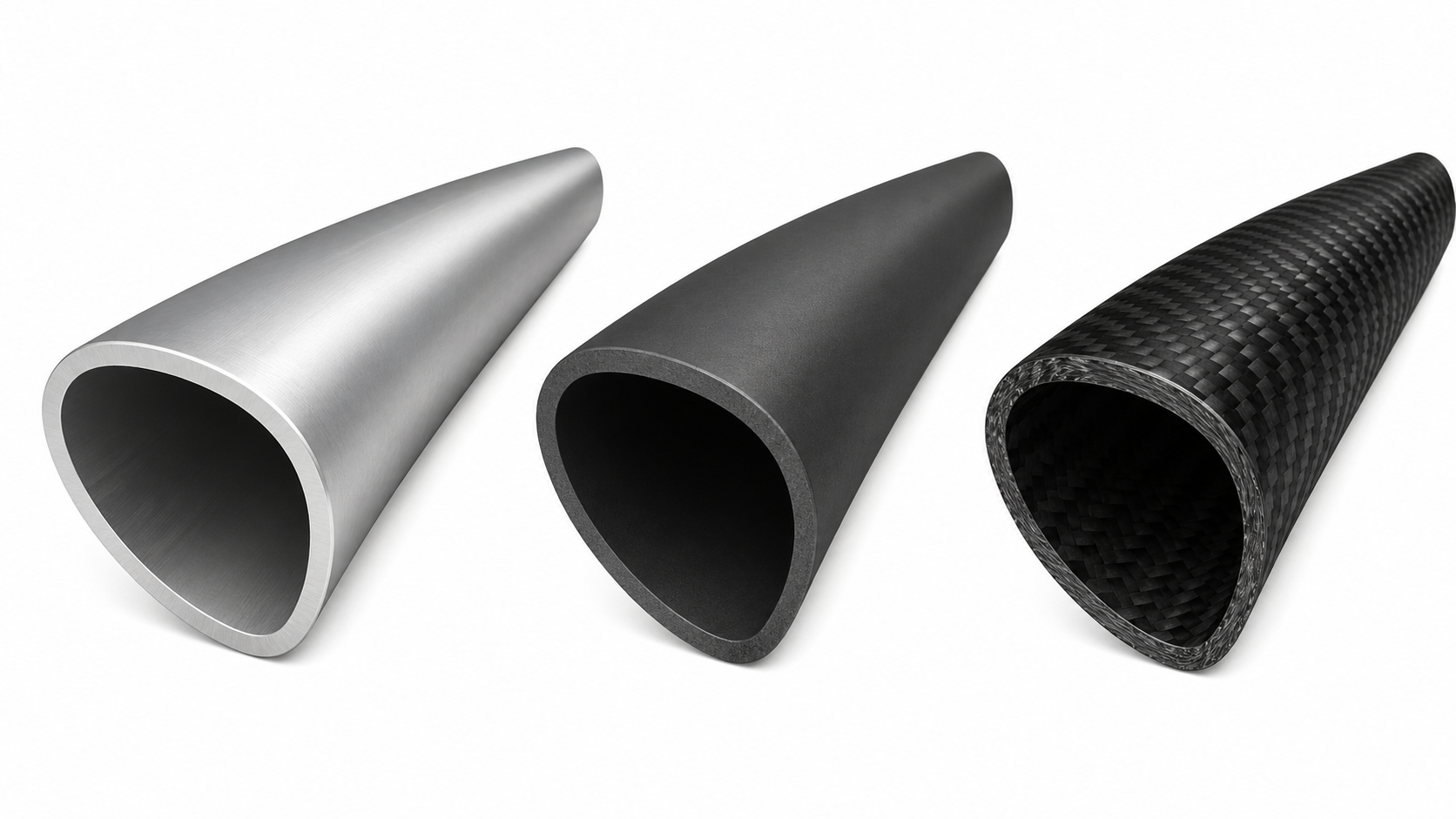
Graphite vs Aluminium vs Carbon Fibre
Material differences, performance impact, and Indian pricing.
HEAD vs Wilson Under ₹5,000
Two big brands compared head-to-head at the budget end in India.
We don't run paid placements and we don't accept free products. Every pick on this page comes from a roundup where we compared the full field on manufacturer specifications, independent expert reviews, and the verified buyer feedback left by Indian customers — weighting Indian evidence heavily and discounting star ratings built on buyers in other markets.