Yonex vs Li-Ning Badminton Rackets — Which Brand Is Better?
Two of the biggest names in badminton go head-to-head. We compare Yonex and Li-Ning across price, technology, model range, and Indian availability to help you pick the right brand for your game.
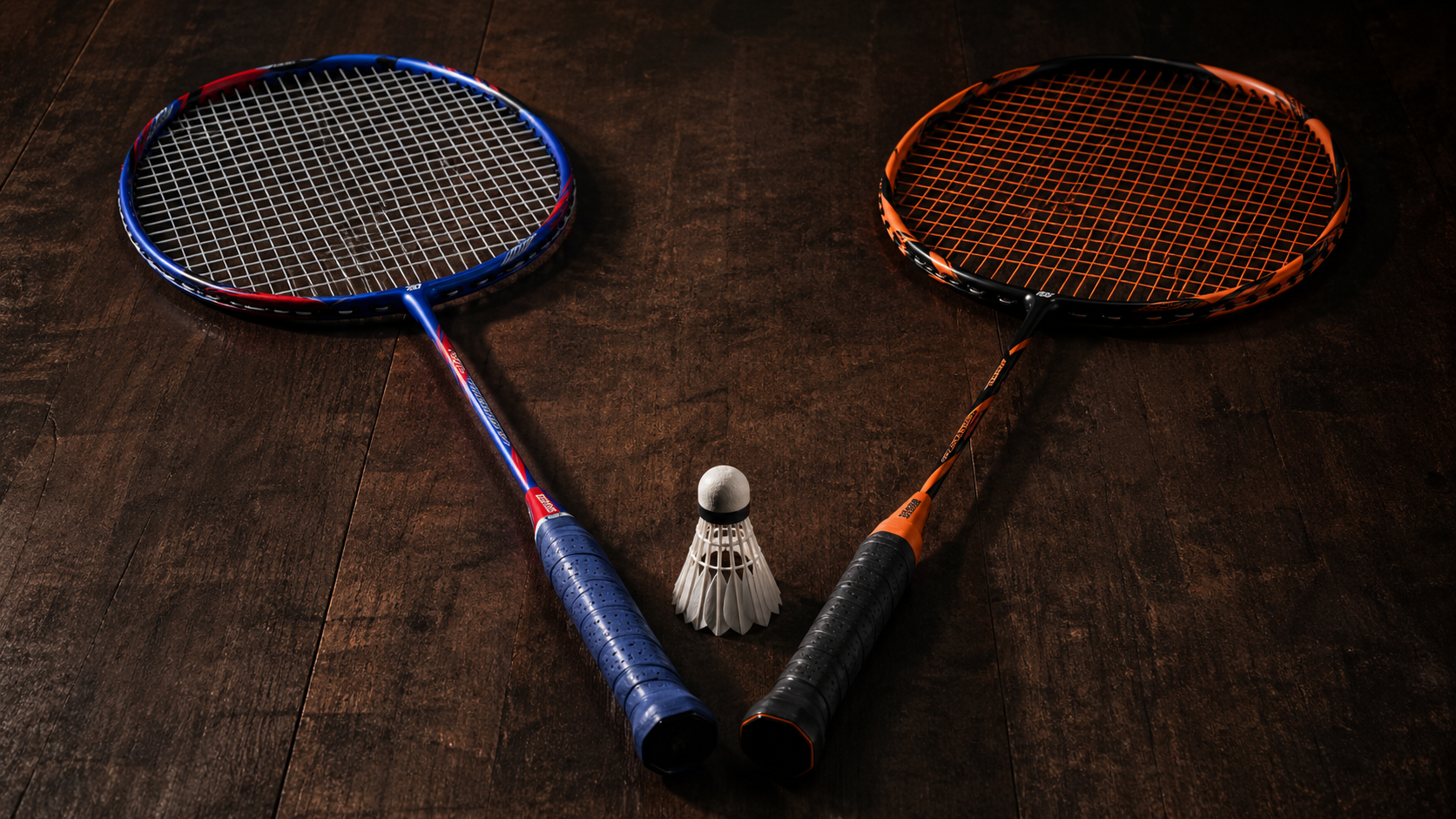
Brand Overview
Yonex
Founded in 1946 in Japan, Yonex is the undisputed patriarch of badminton equipment. They've been making rackets since the 1960s and supply more BWF World Tour players than any other brand. In India, Yonex rackets dominate club play from beginner to national level. Their Indian operations include a manufacturing facility in Faridabad, which keeps entry-level models competitively priced.
Yonex's reputation rests on precision engineering, consistent quality control, and a racket for every conceivable play style. PV Sindhu, Kidambi Srikanth, and Lakshya Sen have all wielded Yonex frames on the international stage.
Li-Ning
Li-Ning, the Chinese sportswear giant founded by the legendary gymnast, entered badminton seriously in 2009 by signing a BWF partnership. They've since built an impressive stable of athletes including Viktor Axelsen, Chen Long, and the entire Chinese national team. In India, Li-Ning has grown steadily — particularly after becoming visible through Indian Super League players.
Li-Ning's approach is boldly innovative. They invest heavily in aerodynamic frame shapes, TB Nano technology, and distinctive designs that stand out on court. Their rackets tend to offer excellent value, often undercutting Yonex by 10-20% at comparable performance levels.
Technology Comparison
Both brands pour significant R&D into proprietary technologies. Here's how their flagship innovations stack up.
Yonex Key Technologies
- Isometric Head Shape: Yonex's signature — a square-ish head that enlarges the sweet spot by 7% compared to conventional oval shapes. Present across nearly all models.
- Nanomesh Neo: Carbon nanotube integration at the shaft for improved flex and repulsion. Found in Astrox and Nanoflare series.
- Rotational Generator System: Strategic weight distribution that allows quick racket rotation. Particularly effective in the Astrox lineup for steep smashes.
- Aero Frame: Reduced air resistance through frame cross-section design. Key feature in the Nanoflare speed series.
Li-Ning Key Technologies
- TB Nano: Li-Ning's carbon nanotube technology that increases shaft strength by 20%. Comparable to Yonex's Nanomesh in purpose and performance.
- Aerotec Beam System: Wind-cutting frame geometry that reduces drag. Li-Ning was among the first to adopt aggressive aerodynamic frame profiles.
- Dynamic Optimum Frame: An enlarged sweet spot technology — Li-Ning's answer to the Isometric head. Effective, though slightly less proven at the highest level.
- UHB Shaft: Ultra-high-modulus graphite shaft for explosive power transfer. Found in the Axforce and Turbo Charging series.
In terms of raw technology, the brands are closer than most players realise. Yonex has the edge in refinement — decades of incremental improvement in the Isometric head geometry, for example. Li-Ning compensates with aggressive innovation and willingness to experiment with unconventional frame shapes.
Price Range Comparison
Here's how the two brands line up across budget categories on Indian retail platforms (Amazon.in, Flipkart, Sports365).
| Budget Segment | Yonex Models | Li-Ning Models | Edge |
|---|---|---|---|
| Under Rs 1,000 | GR-303, Mavis 350 combo | XP-80 IV, G-Force 1500i | Yonex |
| Rs 1,000 – Rs 2,000 | Nanoray Light 18i, Astrox Lite 27i | Windstorm 72, XP-2020 | Tie |
| Rs 2,000 – Rs 5,000 | Astrox Lite 45i, Nanoflare 001 Ability | 3D Calibar 300, Turbo Charging 20 | Li-Ning |
| Rs 5,000 – Rs 10,000 | Astrox 22, Nanoflare 370 Speed | Axforce 80, Bladex 200 | Li-Ning |
| Rs 10,000+ | Astrox 88D Pro, Nanoflare 800 | Axforce 90 Tiger, Halbertec 9000 | Yonex |
The pattern is clear: Yonex dominates at the entry level (under Rs 1,000) thanks to local manufacturing, and at the premium end where decades of tour-level validation matter. Li-Ning offers the strongest value in the crucial Rs 2,000–Rs 10,000 mid-range — the sweet spot for most serious club players in India.
Popular Models: Head-to-Head
Power Player: Yonex Astrox 88D Pro vs Li-Ning Axforce 80
Both are head-heavy attack rackets designed for dominant doubles rear-court play. The Astrox 88D Pro offers Yonex's refined Rotational Generator System for steep smash angles, while the Axforce 80 counters with Li-Ning's UHB shaft for raw power. The Astrox feels more controlled; the Axforce hits harder but demands better technique. At roughly Rs 5,000–7,000 for the Axforce vs Rs 12,000+ for the Astrox 88D Pro, the Li-Ning offers significantly better value if power is your priority.
Speed Player: Yonex Nanoflare 370 vs Li-Ning Windstorm 72
For quick-reaction players who rely on net play and deception, these head-light rackets trade blows effectively. The Nanoflare 370 at around Rs 5,500 delivers Yonex's signature feel and refined sweet spot. The Windstorm 72, priced under Rs 2,000, is arguably the best value proposition in Indian badminton — astonishingly light at 72g with solid construction. If budget matters, the Windstorm wins by a mile.
Beginner: Yonex Nanoray Light 18i vs Li-Ning XP-2020
Under Rs 1,500, both rackets serve beginners well. The Nanoray Light 18i benefits from Yonex's Isometric head and Indian manufacturing quality. The XP-2020 offers a slightly stiffer shaft that some beginners prefer for developing power. We'd give a slight nod to Yonex here for the larger sweet spot — crucial when you're still finding your stroke timing.
Availability in India
Yonex has a significant distribution advantage in India. With a manufacturing unit in Faridabad and a well-established dealer network, genuine Yonex rackets are available in virtually every sports shop in metro and tier-2 cities. Amazon.in and Flipkart both carry extensive Yonex catalogues with reliable authenticity.
Li-Ning's Indian presence has grown steadily but remains more patchy. Their official India website stocks most models, and they're well-represented on Amazon.in. However, physical retail availability is weaker outside major metros. Counterfeits are also a concern — always verify the hologram sticker and buy from authorised channels.
For warranty and after-sales service, Yonex leads. Their Indian service centres handle restringing and warranty claims efficiently. Li-Ning's after-sales infrastructure is improving but still trails behind. If you live in a smaller city, Yonex's availability alone can be a deciding factor.
Our Verdict
Choose Yonex if: You want the safest, most proven option with the widest model range, best Indian availability, and strongest after-sales support. Yonex is the default recommendation for beginners and for premium players who want tour-validated performance.
Choose Li-Ning if: You want the best bang for your buck in the Rs 2,000–Rs 10,000 range, you're an intermediate-to-advanced player who values raw power, or you simply want something different from the Yonex-dominated club scene. Li-Ning punches above its weight in the mid-range.
Bottom line: Neither brand is categorically "better." Yonex wins on heritage, availability, and sweet spot consistency. Li-Ning wins on mid-range value and aggressive power technology. Your play style and budget should decide.
Related Reads
How to Choose a Badminton Racket
Complete guide to weight, balance, shaft flex, and string tension for Indian players.
Best Badminton Racket Brands in India
All major brands ranked — Yonex, Li-Ning, Victor, Apacs, Cosco, and Carlton.
Best Badminton Rackets Under Rs 2,000
Top budget racket picks for beginners in India.
Best Badminton Rackets Under Rs 5,000
Mid-range rackets for improving club players.