How to Choose a Badminton Racket: Complete Guide for Indian Players
Everything you need to know before buying your next badminton racket in India — weight, balance, shaft flex, head shape, string tension, and budget recommendations.
Walking into a sports shop in India and picking a badminton racket can feel overwhelming. You see labels like "4U G5", "head-heavy", "stiff shaft" and wonder what any of it means. Online shopping is even worse — hundreds of options on Amazon.in and Flipkart with spec sheets that read like engineering documents.
This guide cuts through the noise. We'll explain every specification that actually matters, tell you which combinations suit different playing styles, and point you to specific rackets at every price point. Whether you're a weekend warrior at your local community court or training for district-level tournaments, by the end of this guide you'll know exactly what to look for.
Understanding Racket Weight: The U System
Badminton rackets use a "U" classification system to denote weight. The higher the U number, the lighter the racket. This is the opposite of what most people expect, so pay attention.
Weight directly affects three things: how fast you can swing the racket, how much power you generate on contact, and how tired your arm gets over a long session. In India, where club sessions often run 90 minutes or more in warm conditions, fatigue is a real consideration.
| Class | Weight Range | Best For | Common In India? |
|---|---|---|---|
| 1U | 95-99g | Training, heavy hitters (rare in competitive play) | Very rare |
| 2U | 90-94g | Power-oriented singles players | Rare |
| 3U | 85-89g | Advanced singles, powerful all-rounders | Common |
| 4U | 80-84g | All-rounders, doubles, intermediates | Very common |
| 5U | 75-79g | Doubles specialists, beginners, juniors | Common |
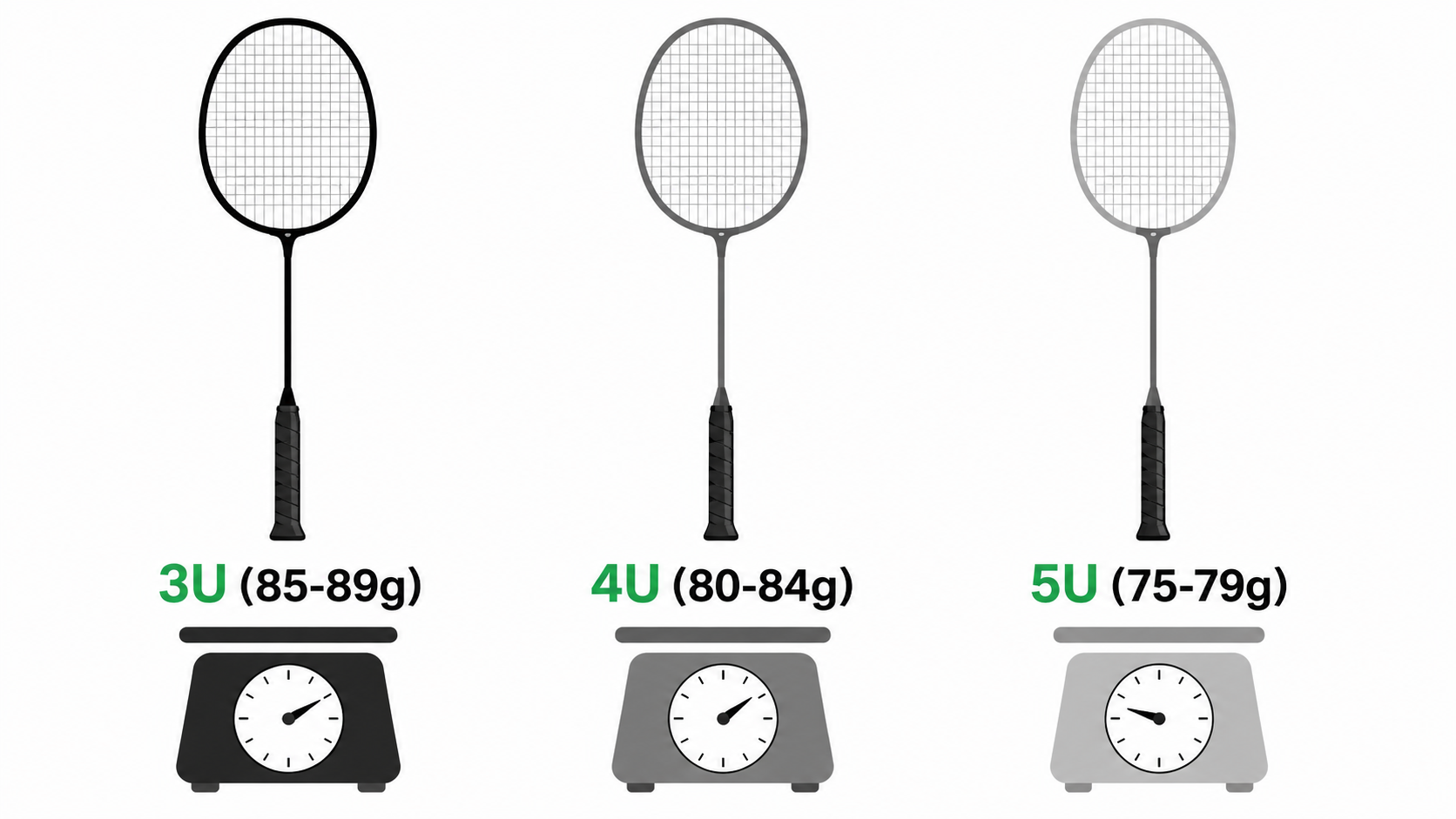
In the Indian market, 3U and 4U rackets dominate. Most Yonex, Li-Ning, and Victor rackets sold in India come in one or both of these weights. 5U options are growing but still less common, while 1U and 2U are mostly limited to training rackets or older models.
Our recommendation for most Indian club players: start with 4U. It's the Goldilocks weight — light enough for quick reactions, heavy enough for decent power, and gentle on the arm during long sessions. For a deeper dive into weight, check out our dedicated badminton racket weight guide.
Balance Point: Head-Heavy, Even, or Head-Light?
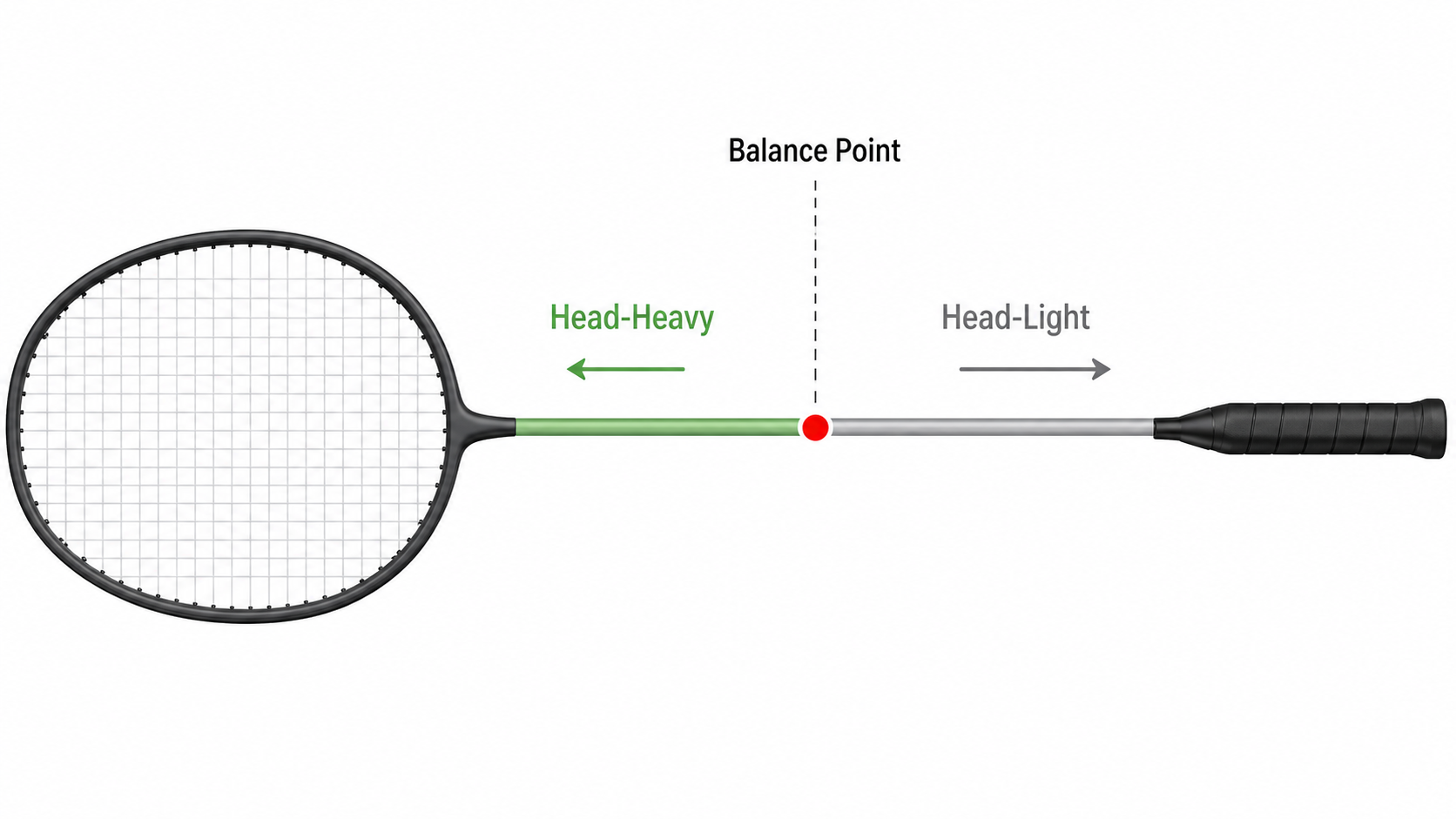
The balance point tells you where the weight is concentrated along the racket's length. This single specification changes how the racket feels more dramatically than almost any other factor.
Head-Heavy (295mm+)
Weight concentrated in the racket head. Generates massive smash power because the heavier head creates more momentum. The trade-off is slower recovery between shots and more strain on the wrist.
Best for: Singles players, aggressive smashers, power-oriented game
Even Balance (285-294mm)
Weight distributed evenly across the racket. Offers a blend of power and manoeuvrability. You won't hit the hardest smashes, but you won't be caught flat-footed at the net either.
Best for: All-rounders, players who play both singles and doubles
Head-Light (<285mm)
Weight concentrated in the handle. Lightning-fast racket speed, excellent for drives and net kills. You sacrifice some smash power but gain tremendous control in fast exchanges.
Best for: Doubles specialists, defensive players, quick net play
A practical tip for Indian players: if you primarily play doubles at your local club (as most recreational players in India do), lean towards even or head-light balance. Doubles is won at the net with fast hands, not from the back of the court with smashes. If you're a singles player or aspire to play singles at a competitive level, a head-heavy racket will reward you once your technique is solid.
Shaft Flexibility: Matching Flex to Your Skill Level
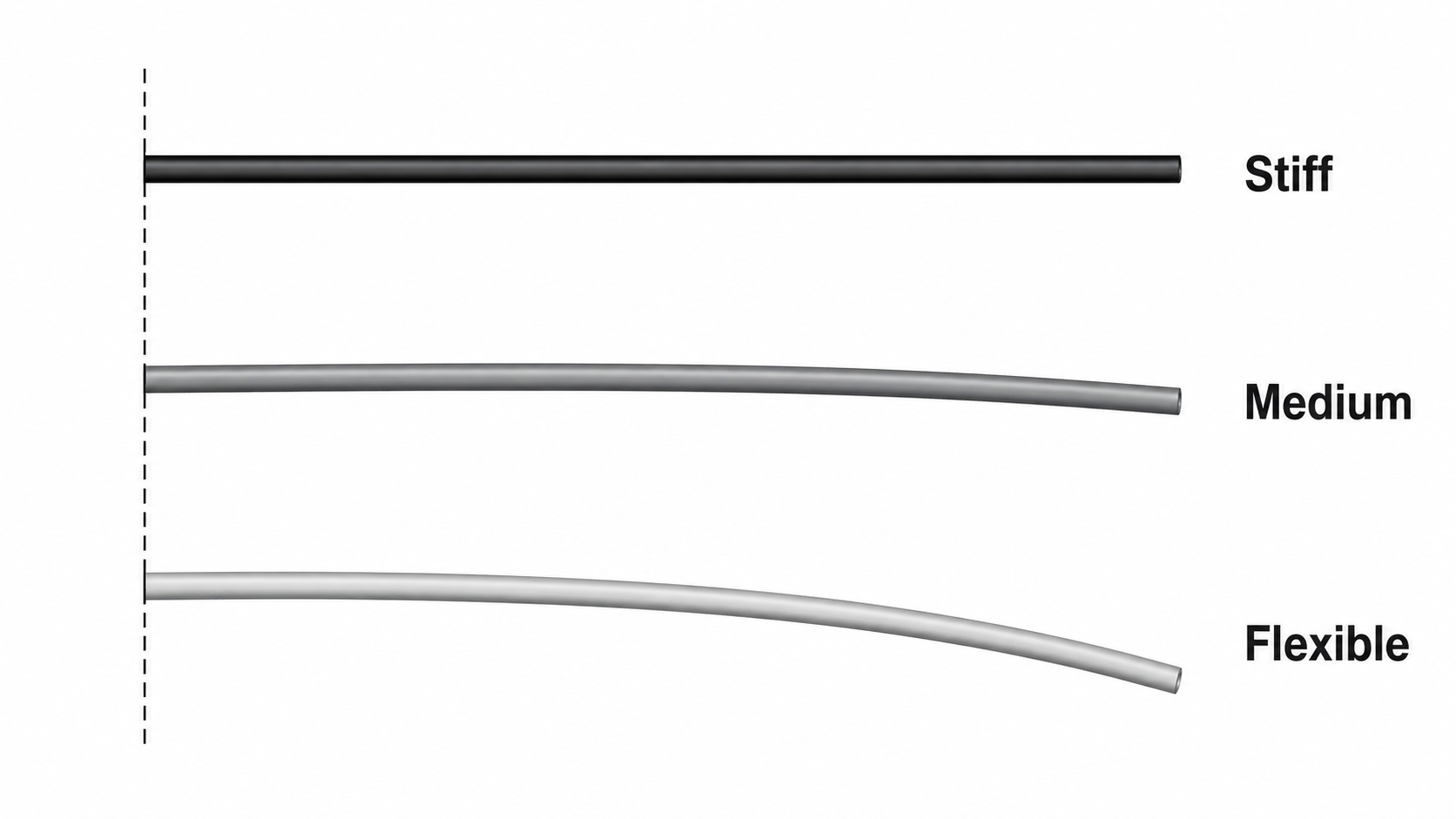
The shaft is the thin tube connecting the handle to the racket head. Its flexibility determines how the racket responds to your swing. This is arguably the most important specification for matching a racket to your ability level, and it's the one most beginners get wrong.
| Shaft Flex | How It Feels | Skill Level | Why |
|---|---|---|---|
| Flexible | Shaft bends easily, acts like a whip | Beginner | Generates power with slower swing speeds; very forgiving on off-centre hits |
| Medium | Moderate bend, balanced response | Intermediate | Good blend of power and control; suitable for players developing technique |
| Medium-Stiff | Slight bend, quicker response | Advanced Intermediate | More control than medium flex; rewards consistent technique |
| Stiff / Extra Stiff | Minimal bend, immediate feedback | Advanced / Professional | Maximum control and precision; requires fast, powerful swings to generate power |
The most common mistake we see Indian players make is buying a stiff racket too early. It's tempting — stiff rackets are often the "pro" models and come in premium colourways. But a stiff shaft with slow swing speed produces weak, inconsistent shots. Be honest about your level, and your game will improve faster.
Our general recommendation: If you've been playing less than a year, go flexible. One to three years of regular play, go medium or medium-stiff. Stiff and extra-stiff are for players who train 3+ times a week and have sound technique.
Head Shape: Isometric vs Oval
Racket heads come in two main shapes, and this choice is more straightforward than the others.
Isometric (square-ish): Pioneered by Yonex, this shape widens the sweet spot by making the string bed more uniformly sized. The vast majority of modern rackets use an isometric frame. For beginners and intermediates, this is the clear choice — you get more consistent shots even when you don't hit dead-centre.
Oval (traditional): A smaller, more concentrated sweet spot. When you hit the centre perfectly, the feedback and power are exceptional. But miss by a centimetre and the shot quality drops noticeably. Some advanced players prefer this for the concentrated power and precise feel.
For almost every Indian player reading this guide, go isometric. The sweet spot advantage is simply too significant to pass up, especially on outdoor courts where wind can shift the shuttle slightly.
String Tension Guide for Indian Conditions
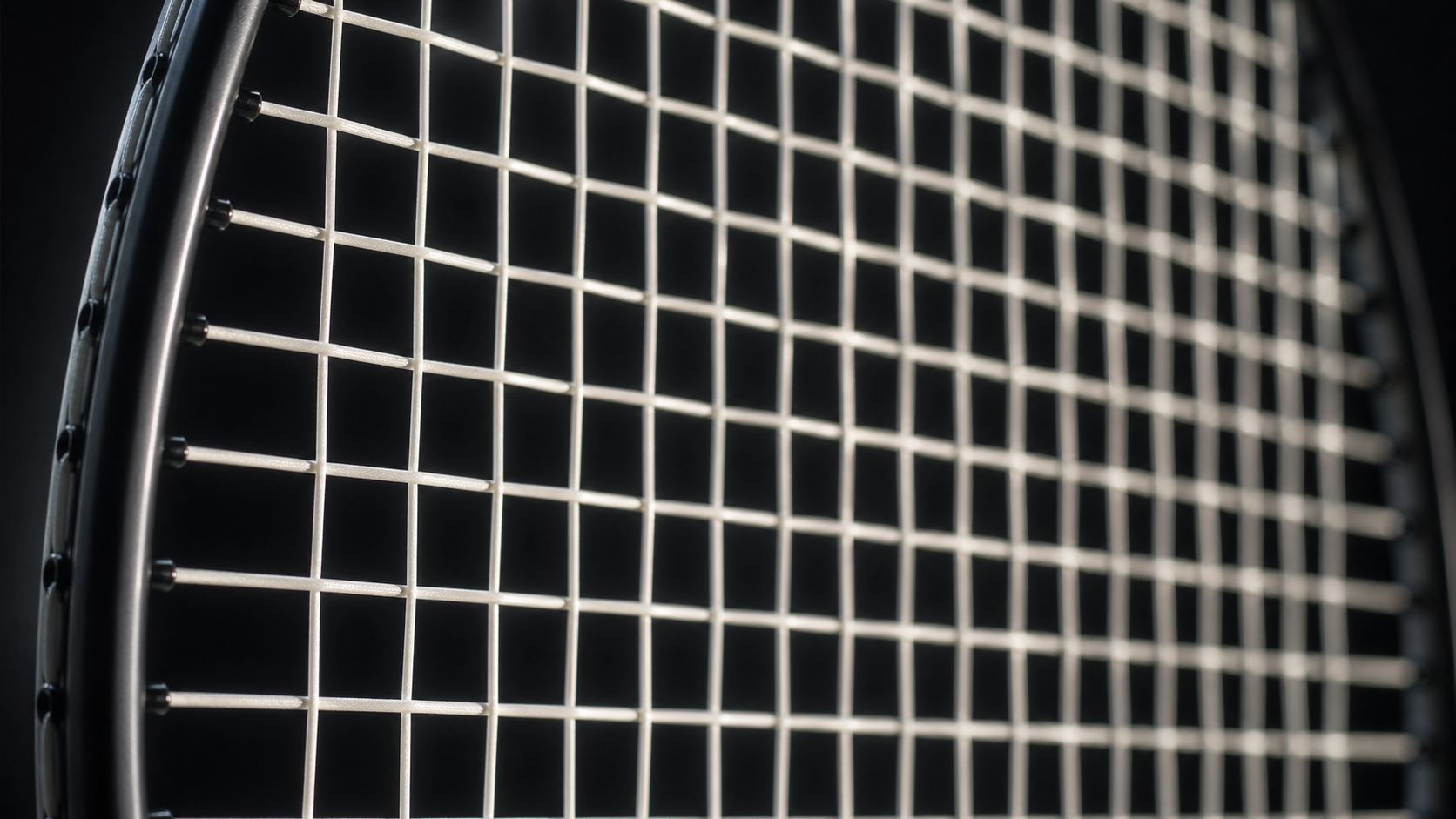
String tension is measured in pounds (lbs) and affects the racket's power and control balance. Higher tension = more control but less power (and a smaller sweet spot). Lower tension = more power but less precision.
India's climate adds a unique variable. High humidity and heat cause nylon and multifilament strings to lose tension faster than in cooler climates. This means you may need to restring more often, and you should factor in some tension loss when choosing your starting tension.
| Level | Recommended Tension | Notes |
|---|---|---|
| Beginner | 20-23 lbs | Larger sweet spot, more repulsion power, easier on the arm |
| Intermediate | 24-26 lbs | Balanced power and control; the sweet spot for most club players |
| Advanced | 27-30 lbs | Maximum control, precise placement; requires consistent technique |
| Professional | 30-35 lbs | Tournament-level control; very small sweet spot, high breakage risk |
Indian-specific tip: If you play outdoors (as many recreational players in India do), stick to the lower end of your range. Wind and feather shuttle inconsistencies are better managed with a more powerful, lower-tension setup. Indoor players can push tension slightly higher for better control.
Also, don't exceed your racket's recommended tension range. Most budget rackets (under Rs 2,000) are rated for a maximum of 24-26 lbs. Stringing them higher risks warping or cracking the frame. Premium rackets from Yonex and Li-Ning typically handle 28-33 lbs safely.
Budget Recommendations for Indian Players
Now that you understand the specifications, let's talk about what you can actually get at different price points in India.
Under Rs 2,000 — Best for Beginners
At this price, expect aluminium-graphite or basic graphite frames with flexible shafts. These are perfectly fine for learning the game, casual play, and weekend sessions. You'll typically get 4U weight with flexible or medium flex.
Good options include the Yonex GR 303, Li-Ning XP Series, and Cosco CBX 450. See our detailed picks in the best badminton rackets under Rs 2,000 guide.
Rs 2,000 - Rs 5,000 — Best for Improving Players
This is the sweet spot (pun intended) for most Indian club players. You get full graphite construction, medium to medium-stiff shafts, and choices between 3U and 4U weights. Brands like Yonex, Li-Ning, and Victor offer excellent options here.
Check out our best badminton rackets under Rs 5,000 for our top picks in this range.
Rs 5,000 - Rs 15,000 — Serious Players
Premium graphite and carbon fibre frames, advanced shaft technologies, and excellent build quality. You're getting rackets used by state and national-level players. Yonex Astrox and Nanoflare series, Li-Ning Blade and Windstorm series, and Victor Thruster and Jetspeed series all have models in this range.
Rs 15,000+ — Professional Grade
Top-of-the-line rackets with the latest material technologies. These are the same models used by international players like PV Sindhu and Lakshya Sen. Only invest here if you compete regularly and have a well-developed technique that can exploit the advantages these rackets offer.
Quick Decision Framework
Still not sure what to pick? Here's a simple framework based on the most common player profiles we see in India:
| Player Profile | Weight | Balance | Flex | Tension |
|---|---|---|---|---|
| Weekend casual | 4U-5U | Even | Flexible | 20-22 lbs |
| Regular club doubles | 4U | Even / Head-light | Medium | 23-25 lbs |
| Competitive singles | 3U | Head-heavy | Stiff | 26-28 lbs |
| Junior (under 15) | 5U | Even | Flexible | 20-22 lbs |
Remember, these are starting points. As you develop your game and understand your preferences, you'll naturally gravitate towards specific configurations. The most important thing is to avoid extremes when you're starting out — a moderately weighted, even-balance, medium-flex racket will serve most Indian players well for the first couple of years.
For brand-specific recommendations and to understand what each manufacturer brings to the table, read our guide to the best badminton racket brands in India.
Related Reads
Frequently Asked Questions
Which badminton racket weight is best for beginners in India?
For most beginners in India, a 4U (80-84g) or 5U (75-79g) racket is ideal. These lighter rackets are easier to manoeuvre, reduce wrist and shoulder strain, and give you more time to react. Once your technique and strength improve over 6-12 months, you can consider moving to a heavier 3U racket.
Is a head-heavy or head-light racket better for doubles?
Head-light rackets are generally better for doubles because the fast exchanges at the net demand quick racket speed. A head-light balance lets you switch between forehand and backhand grips faster and react to drives and pushes at close range. Reserve head-heavy rackets for singles where you have more time to load your smash.
How often should I restring my badminton racket?
If you play 2-3 times a week, restring every 2-3 months. Strings lose tension gradually even if they don't break, which affects your control and power. In India's humid conditions, strings can lose tension faster, so serious players often restring monthly. A good rule of thumb: restring as many times per year as you play per week.
Does shaft flexibility really matter that much?
Absolutely. Shaft flexibility is arguably the single most important spec for matching a racket to your skill level. A stiff shaft rewards fast, powerful swings with precise shot placement but punishes slow or incorrect technique. A flexible shaft generates power even with a slower swing, making it far more forgiving for beginners and intermediates.
What string tension should I use as an intermediate player in India?
Intermediate players in India typically do well between 24-26 lbs. This range offers a good balance of power and control. Avoid going above 27 lbs unless your technique is very consistent, as higher tensions reduce the sweet spot and increase the risk of injury. Also consider that India's heat and humidity can cause strings to lose tension faster.
Can I use the same racket for both singles and doubles?
You can, and most club players in India do exactly that. An even-balance 4U racket with medium-stiff flex is the most versatile choice for both formats. However, if you play competitively, having a head-heavy racket for singles (bigger smashes) and a head-light racket for doubles (faster net play) does give you an edge.