Tennis Racket Grip Size Guide
How to measure your hand, what each grip size means, and why getting it right prevents injury and improves your game.
Grip size is one of the most overlooked specs when buying a tennis racket in India. Players will agonise over head size and weight, then grab whatever grip comes on the racket. That's a mistake. The wrong grip size leads to discomfort, poor shot control, and — in the worst case — chronic elbow injuries.
This guide walks you through two proven methods to find your ideal grip size, explains the universal sizing chart, and covers practical fixes if you end up between sizes. Everything is written with Indian players in mind — hand sizes, humidity considerations, and locally available solutions.
Why Grip Size Matters
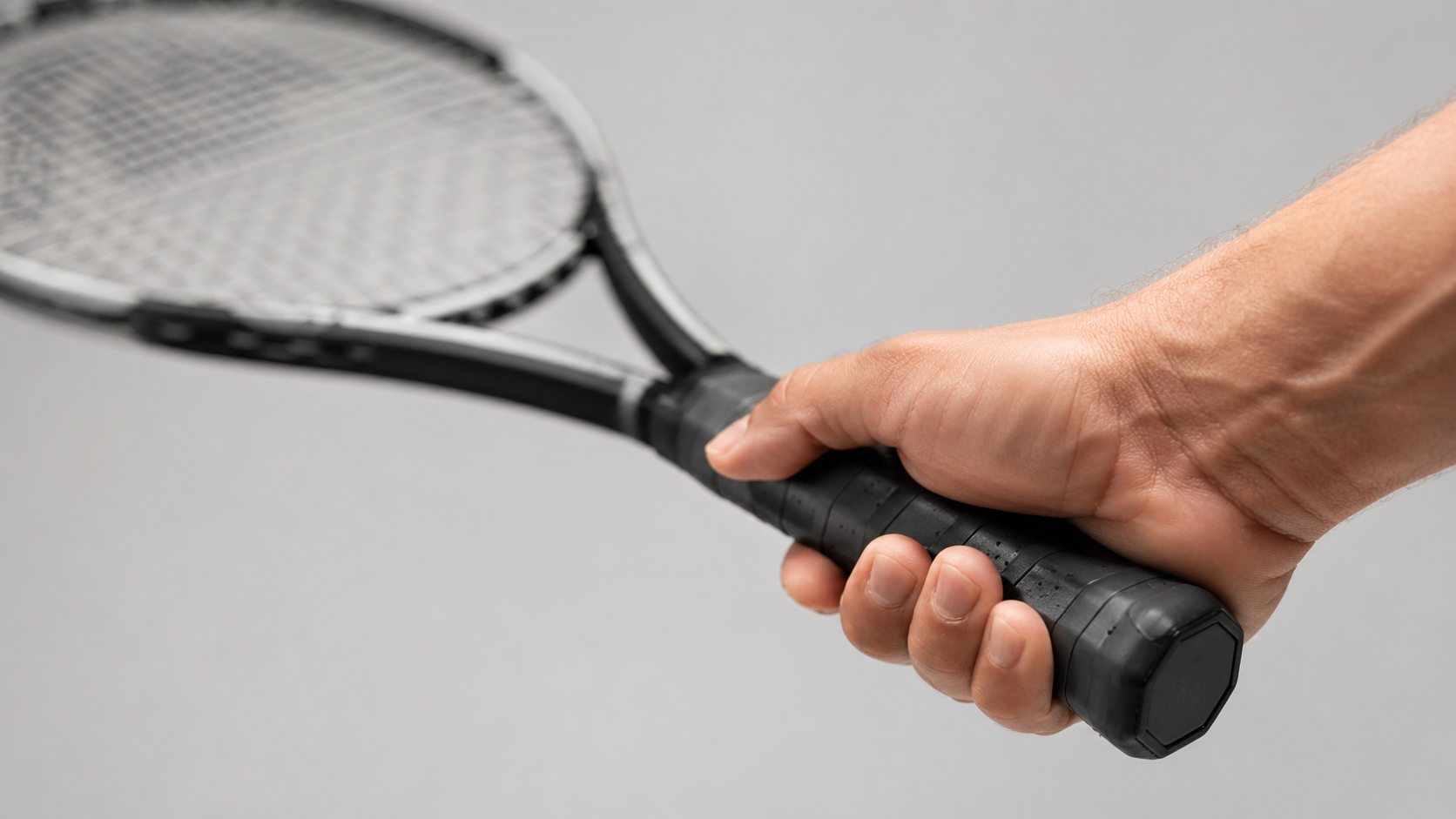
Your grip is the only physical connection between you and your racket. Every ounce of power, every degree of spin, and every adjustment in angle passes through it. When the grip fits your hand correctly, the racket becomes an extension of your arm. When it doesn't, three things go wrong:
- Loss of control: A loose grip forces compensating muscle tension, which reduces wrist mobility and makes touch shots inconsistent.
- Fatigue and injury: Squeezing too hard to compensate for a wrong-sized grip strains the forearm tendons — the classic path to tennis elbow (lateral epicondylitis).
- Reduced spin: An oversized grip limits wrist snap, which directly reduces your ability to generate topspin and slice.
Method 1: The Ruler Method
This is the most accurate way to measure your grip size at home. All you need is a ruler or measuring tape.
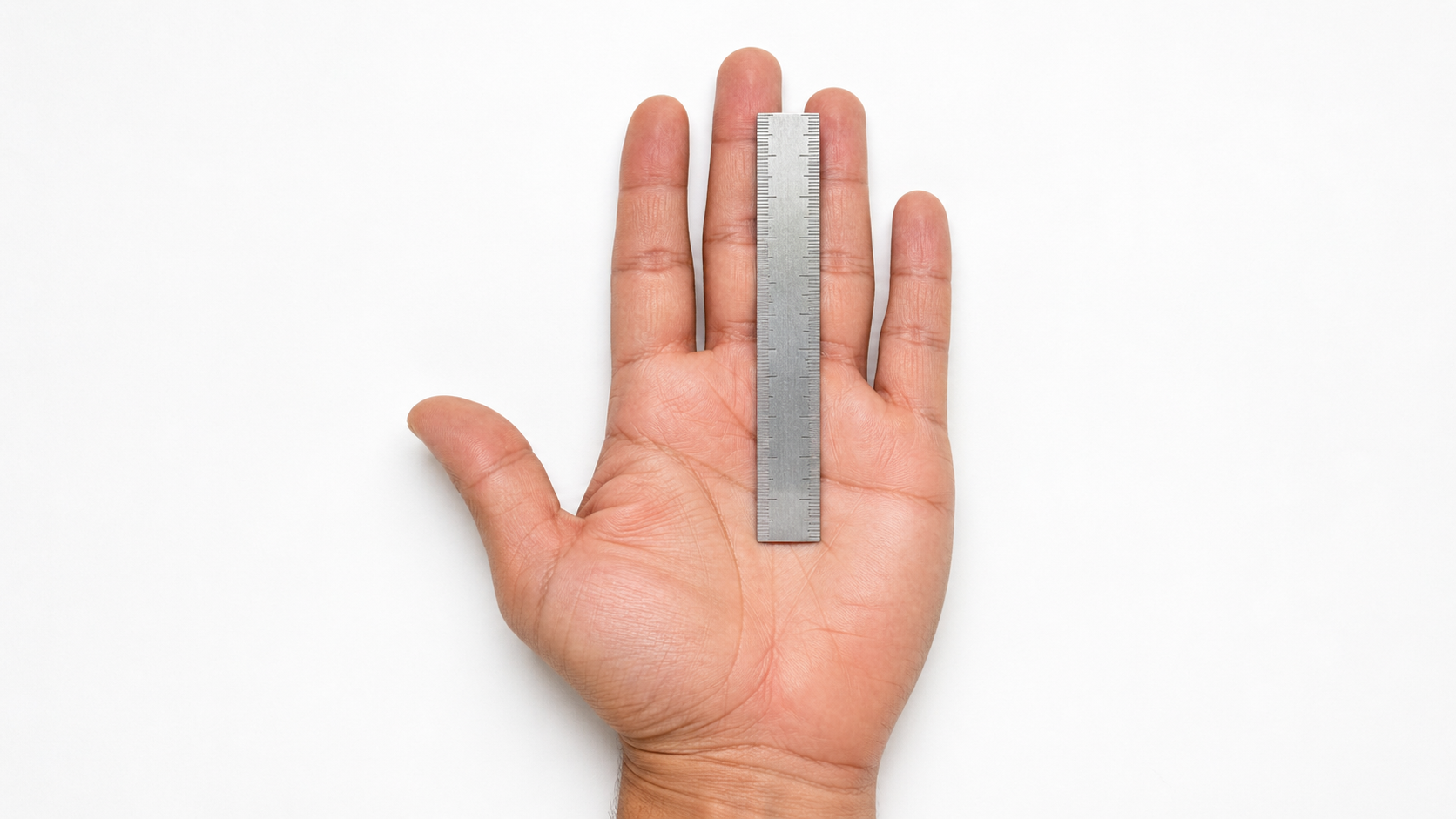
- Open your dominant hand and extend your fingers fully, with your palm facing up.
- Align the ruler with the bottom lateral crease of your palm (the line that runs horizontally across the middle of your palm).
- Measure to the tip of your ring finger. Place the end of the ruler at the crease and read the measurement at the tip of your ring finger.
- Match to the chart below. Your measurement in inches corresponds directly to a grip size.
Pro tip: If your measurement falls between two sizes, always choose the smaller size. You can easily add an overgrip to increase the circumference by about 1/16 inch, but reducing grip size is much harder.
Method 2: The Index Finger Test
This method requires you to hold an actual racket, so it's best done at a sports shop. It's quick and gives an immediate feel-based confirmation.
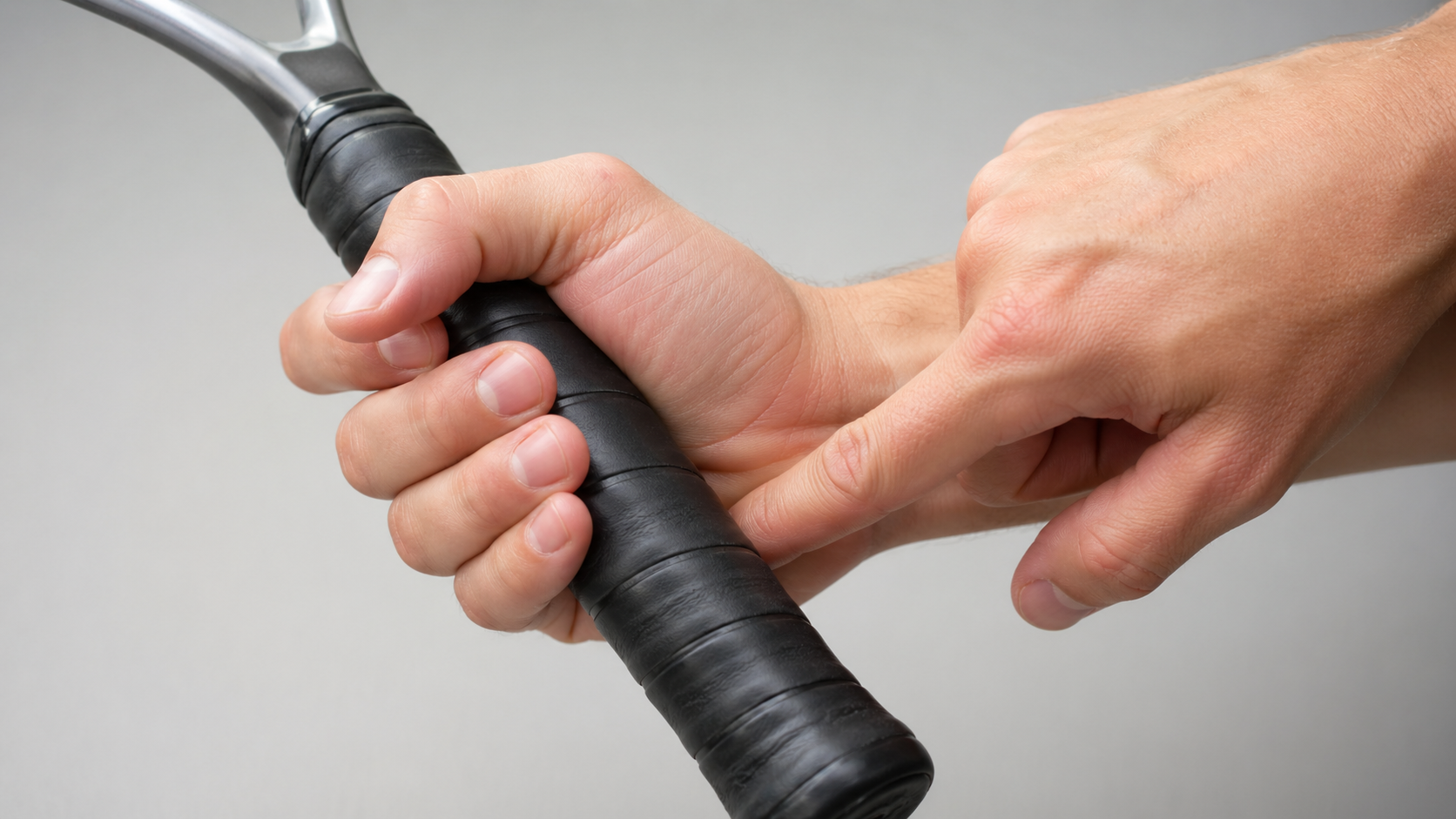
- Hold the racket with an Eastern forehand grip (the "shake hands" grip).
- Look at the gap between your fingertips and the base of your palm.
- Slide your index finger of your non-dominant hand into that gap.
- Check the fit: Your index finger should fit snugly. If there's extra space, the grip is too large. If your finger doesn't fit at all, the grip is too small.
This test is especially useful in Indian sports shops where you may not have a ruler handy but can try multiple rackets on the spot.
Complete Grip Size Chart
Below is the universal grip size chart used by all major brands (HEAD, Wilson, Babolat, Yonex). The European size number is what you'll see printed on the racket butt cap.

| European Size | US Size (inches) | Circumference (mm) | Best For |
|---|---|---|---|
| 0 | 4 inches | 100 mm | Junior players, very small hands |
| 1 | 4 1/8 inches | 103 mm | Junior players, small adult hands |
| 2 | 4 1/4 inches | 108 mm | Most women, smaller men's hands |
| 3 | 4 3/8 inches | 111 mm | Most Indian men — the most common size |
| 4 | 4 1/2 inches | 114 mm | Larger hands |
| 5 | 4 5/8 inches | 118 mm | Very large hands — rare in Indian market |
Grip Sizes in the Indian Market
If you're shopping for rackets in India, here's what to expect:
- Most budget rackets (under ₹5,000) come in grip size 2 or 3 only. Brands like Cosco and Nivia rarely offer size options — what you see is what you get.
- Mid-range rackets (₹5,000–₹15,000) from HEAD, Wilson, and Babolat on Amazon.in usually offer a choice of 2, 3, or 4.
- Premium rackets (₹15,000+) are available in the full range (1 through 5), but stock of extreme sizes may be limited online.
- Humidity matters: Indian summers cause hands to swell slightly and sweat more. Many Indian coaches recommend buying one size smaller and adding a sweat-absorbing overgrip.
Overgrip and Replacement Grip Solutions
If your racket's grip isn't perfect, you have practical options:
Overgrips
An overgrip is a thin wrap applied over the existing grip. It adds roughly 1/16 inch (1.5 mm) to the circumference and provides a fresh, tacky surface. Key points:
- Cost: ₹150–₹400 for a pack of 3 (Wilson Pro Overgrip and Yonex Super Grap are popular in India).
- Sweat absorption: Essential in India's heat. Dry-feel overgrips (like Tourna Grip) are excellent for heavy sweaters.
- Replacement frequency: Every 6–10 hours of play, or when the surface becomes shiny and slick.
Replacement Grips
A replacement grip replaces the original base grip entirely. It's thicker than an overgrip and can change the feel more significantly:
- To increase size: Use a thicker replacement grip (like Wilson Premium Leather Grip) to add up to 1/8 inch.
- To decrease size: Replace the stock grip with a thinner synthetic grip. This is uncommon but possible.
- Cost: ₹300–₹1,200 depending on material (synthetic vs leather).
Heat-Shrink Sleeves
For a more permanent increase, heat-shrink sleeves fit under the grip and add about 1/8 inch to the circumference. They require a heat gun to apply and are best done by a racket technician. In India, most pro shops in metro cities offer this service for ₹200–₹500.
What Happens With the Wrong Grip Size
Understanding the consequences of a poorly sized grip helps you diagnose problems you might already be experiencing on court.
Grip Too Small
- Racket twists on off-centre hits, especially on returns and volleys.
- You unconsciously grip harder to compensate, leading to forearm fatigue within 30 minutes.
- Increased risk of tennis elbow due to repetitive strain on the extensor tendons.
- Wrist pronation becomes excessive, which can cause wrist pain over time.
Grip Too Large
- Limited wrist snap reduces serve speed and spin potential.
- Difficulty switching grips quickly between forehand and backhand — a major problem for intermediate players working on their technique.
- Hand cramps after extended rallies.
- Reduced feel and touch on drop shots and volleys.
Quick Decision Guide
| Scenario | Recommended Action |
|---|---|
| Between two sizes | Choose the smaller size + overgrip |
| Playing in Indian summer heat | Go one size down + dry-feel overgrip (Tourna Grip) |
| Beginner, unsure of size | Start with size 2 (women) or size 3 (men) — most common in India |
| Experiencing tennis elbow | Check grip size immediately — it's a leading cause |
| Buying online, can't test | Use the ruler method + order one size smaller as a safety margin |
Find Your Next Racket
Now that you know your grip size, find the perfect racket in your budget:
Frequently Asked Questions
What grip size do most Indian adult men use?
Most Indian adult men fall in the grip size 2 (4 1/4 inches or 108 mm) to grip size 3 (4 3/8 inches or 111 mm) range. If you're between sizes, go with the smaller one and add an overgrip.
Can I change my tennis racket grip size?
You can increase grip size by 1/16 inch with an overgrip, or up to 1/8 inch with a heat-shrink sleeve. Reducing grip size is harder — you'd need to remove the base grip and replace it with a thinner one, which is not always practical.
What happens if my grip is too big?
An oversized grip limits wrist snap on serves, makes it harder to generate topspin, and can cause elbow strain. You'll feel like you're fighting the racket on every shot.
What happens if my grip is too small?
A grip that's too small forces you to squeeze harder, which fatigues the forearm quickly and increases the risk of tennis elbow. The racket may also twist in your hand on off-centre hits.
Should beginners in India use an overgrip?
Yes. An overgrip adds cushioning and sweat absorption — essential in India's humid conditions. It also bumps the grip size up slightly, so if you're between sizes, buy the smaller grip and add an overgrip.
How often should I replace my overgrip?
Replace your overgrip every 6 to 10 hours of play, or sooner if it becomes slick. In hot, sweaty Indian summers, you may need to change it after every 2-3 sessions.
Is grip size the same for all brands?
Grip sizes follow a universal standard (sizes 0 through 5), but the actual feel can vary slightly between brands because of grip shape — HEAD rackets tend to feel more rectangular, while Wilson grips feel rounder. Always test in hand if possible.