How to Choose a Tennis Racket for Beginners in India
Everything you need to know before buying your first racket — head size, weight, material, budget, and what actually matters at the beginner level.
Buying your first tennis racket in India can feel overwhelming. Walk into any sports shop or browse Amazon.in and you'll find dozens of options ranging from ₹800 to ₹25,000+. The spec sheets list head sizes, swing weights, balance points, and beam widths — numbers that mean nothing to someone who just wants to start playing.
Here's the good news: as a beginner, you only need to get a few things right. This guide cuts through the jargon and tells you exactly what to look for, what to ignore, and how much to spend. We've written it specifically for the Indian market — covering local brands, Indian court surfaces, and real prices you'll find online.
Head Size — The Most Important Spec for Beginners
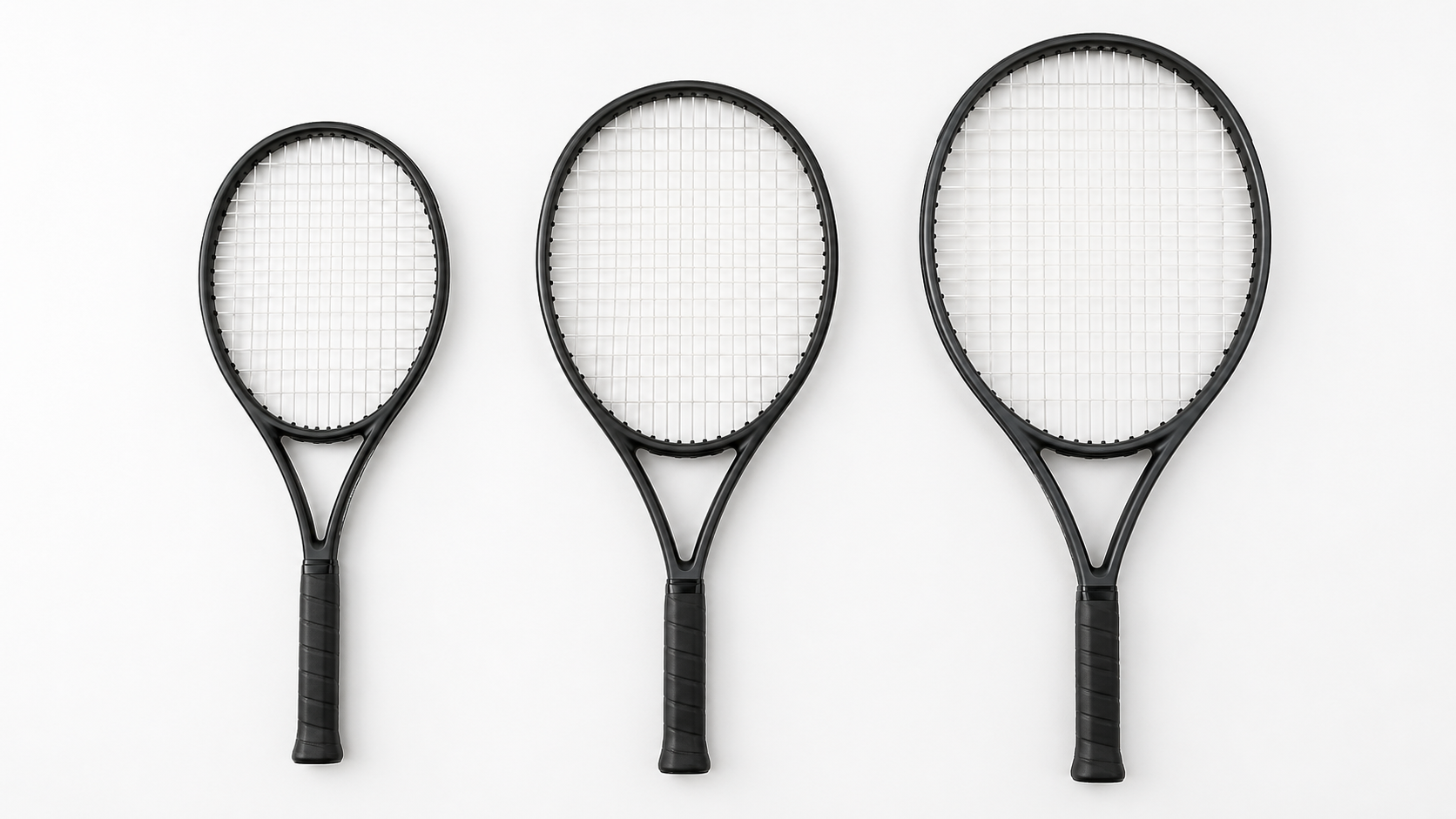
Head size refers to the area of the racket face, measured in square inches. It directly determines two things: the size of your sweet spot and the amount of power the racket generates. For beginners, bigger is better.
| Category | Head Size | Sweet Spot | Power | Control | Best For |
|---|---|---|---|---|---|
| Midsize | 85–97 sq in | Small | Low | High | Advanced players |
| Midplus | 98–104 sq in | Medium | Medium | Medium-High | Intermediate players |
| Oversize | 105–110 sq in | Large | High | Medium | Beginners (recommended) |
| Super Oversize | 111–135 sq in | Very Large | Very High | Low | Seniors, rehab players |
Our recommendation: Start with 100–110 sq inches. You'll mishit often as a beginner, and a larger head compensates for imprecise timing and contact point. As your technique improves over 6-12 months, you can move to a midplus frame if you want more control.
Weight — Lighter Is Better for Learning
Racket weight is listed in grams, usually unstrung. Stringing adds roughly 15-20g. Here's how to think about weight as a beginner:
| Category | Weight (unstrung) | Feel | Best For |
|---|---|---|---|
| Ultra-Light | 230–260g | Very easy to swing, less stable | Juniors, seniors, players with arm issues |
| Light | 260–285g | Easy to manoeuvre, decent stability | Beginners (recommended) |
| Medium | 285–310g | Good balance of power and control | Intermediate to advanced |
| Heavy | 310–340g | Maximum stability and plow-through | Advanced, competitive players |
A common mistake Indian beginners make is buying a heavy racket thinking it'll give them more power. In reality, racket head speed generates power — and you can swing a lighter racket faster. A 270g racket swung with proper technique will outperform a 310g racket swung with a stiff arm every time.
Most budget rackets available in India (Cosco, HEAD Titanium series) fall in the 260-285g range, which is perfect for beginners.
Balance Point — Head-Heavy vs Head-Light
Balance describes where the weight is concentrated along the racket's length. It's measured in centimetres from the butt cap, or described as points head-heavy (HH) or head-light (HL).
- Head-heavy (balance > 33cm): More mass in the head generates free power on groundstrokes. This is common in lightweight beginner rackets — the head-heavy balance compensates for the low overall weight. Good for beginners who don't have full swing technique yet.
- Even balance (balance ~33cm): A middle ground. Versatile but not exceptional in any area.
- Head-light (balance < 33cm): Weight concentrated in the handle makes the racket easier to manoeuvre at the net. Preferred by advanced players who serve-and-volley. Not ideal for beginners.
Beginner recommendation: Look for head-heavy or even balance. Most budget Indian rackets are slightly head-heavy by design, so this takes care of itself if you buy in the ₹2,000-₹5,000 range.
Frame Material
The material your racket is made from affects weight, vibration, durability, and price. Here's a quick overview (we have a detailed material comparison guide if you want to go deeper):
- Aluminium: Cheapest option (₹800-₹2,500). Heavy, high vibration, durable. Fine for absolute beginners who are testing whether they enjoy tennis. Not recommended if you plan to play regularly.
- Graphite composite: The standard for serious rackets (₹2,500-₹25,000+). Lightweight, low vibration, excellent power transfer. This is what you should buy if you're committed to learning.
- Carbon fibre: Marketing term often used interchangeably with graphite. Premium carbon fibre layups offer marginal gains over standard graphite at a higher price. Not worth the premium for beginners.
Bottom line: Buy a graphite or graphite composite racket. At the ₹3,000-₹5,000 price point in India, you'll find excellent graphite options from HEAD and Wilson that will last you through your entire beginner phase and well into intermediate play.
Pre-Strung vs Unstrung: The Indian Debate
This comes up constantly in Indian tennis forums, and the answer is simpler than people make it:
Pre-Strung Rackets
- Come ready to play out of the box.
- Factory strings are basic synthetic gut — adequate for beginners.
- Available at every price point on Amazon.in and Flipkart.
- No additional cost for strings (₹500-₹2,000) or stringing labour (₹300-₹500).
- Verdict: Perfect for beginners. You won't notice the difference between factory strings and premium strings until you've been playing 6+ months regularly.
Unstrung Rackets
- Sold as frame only — you choose and install strings separately.
- Allows customisation of string type, gauge, and tension.
- Common in the ₹10,000+ segment.
- Requires access to a stringing machine — available at pro shops in metro cities, harder to find in tier-2 and tier-3 cities.
- Verdict: Skip this as a beginner. Save the extra cost for coaching instead.
Indian Court Surfaces — What You'll Play On
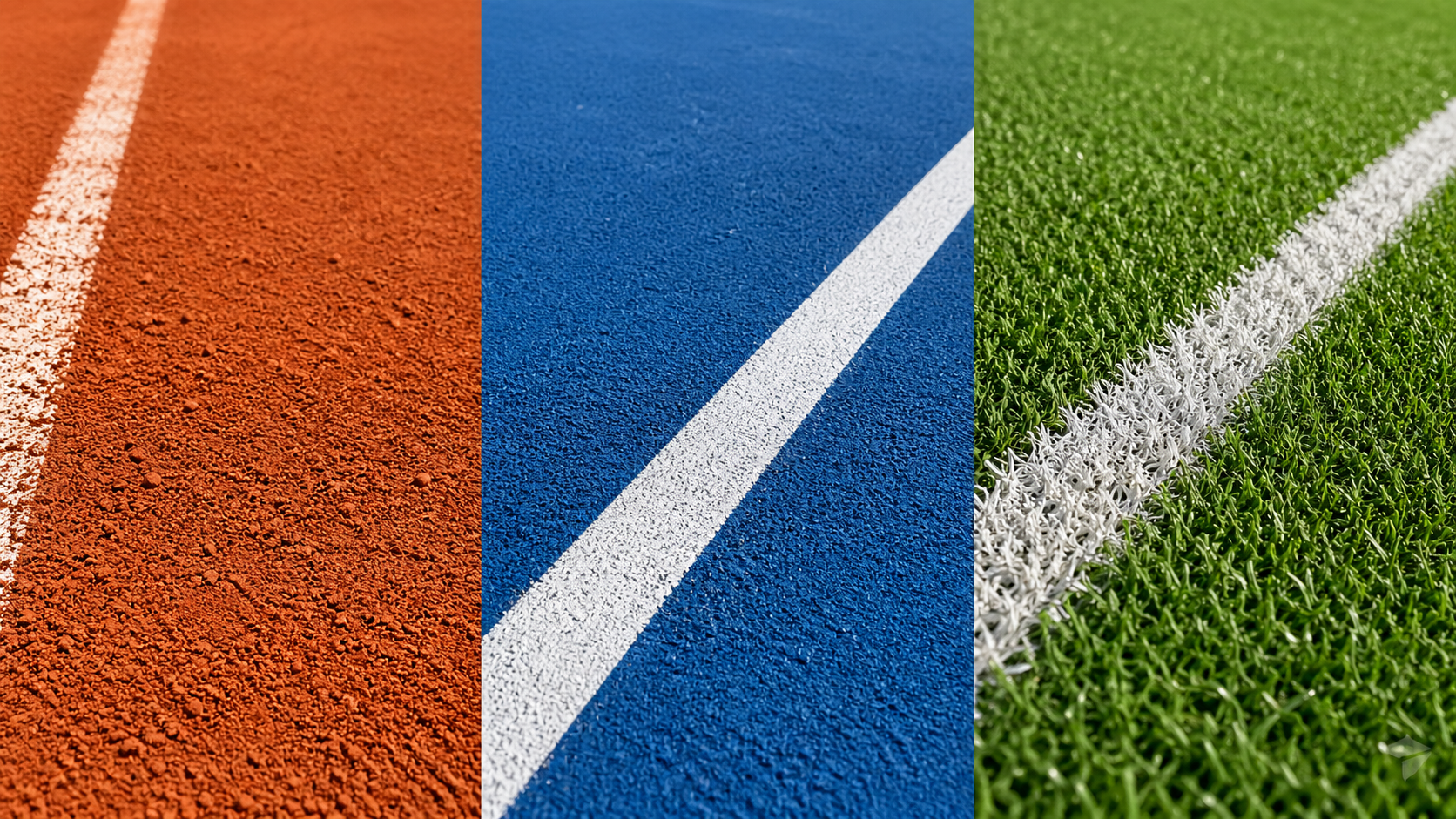
India has a mix of court surfaces, and where you play can influence your racket choice slightly — though at the beginner level, it matters much less than people think.
Hard Courts (Concrete/Acrylic)
The most common surface in Indian cities. Found at public parks, housing societies, and most coaching academies. The ball bounces high and fast. Hard courts are tough on the body — a lighter racket with good shock absorption (graphite) helps reduce joint stress.
Clay Courts (Red Clay)
Found at traditional tennis clubs, especially in cities like Chennai, Delhi, Mumbai, and Kolkata. The ball bounces slower and higher. Clay rewards patience and topspin. Any beginner racket works fine on clay — the surface is forgiving on both the player and the equipment.
Synthetic Courts (Artificial Turf/Carpet)
Increasingly popular at modern sports complexes. These surfaces offer a medium-paced game. Racket choice is not significantly affected by synthetic surfaces at the beginner level.
Budget Guide — What to Spend in India
Here's a realistic breakdown of what your money buys you in the Indian tennis racket market:
| Budget Range | What You Get | Brands Available | Our Take |
|---|---|---|---|
| Under ₹2,000 | Aluminium frames, basic strings, limited size options | Cosco, Nivia, generic | Only for casual, once-a-month play |
| ₹2,000–₹5,000 | Graphite composite, decent strings, good head sizes | HEAD, Cosco, Wilson | Best value for beginners |
| ₹5,000–₹10,000 | Full graphite, better dampening, more size options | HEAD, Wilson, Babolat | Good if you're committed and want to skip upgrading later |
| ₹10,000–₹20,000 | Premium graphite, advanced tech, unstrung options | HEAD, Wilson, Babolat, Yonex | Overkill for beginners — save it for your second racket |
The Beginner's Checklist
Before you click "Add to Cart," make sure your racket meets these criteria:
Head Size: 100-110 sq in
Bigger sweet spot, more forgiveness.
Weight: 260-285g unstrung
Light enough to swing comfortably for an hour.
Material: Graphite composite
Skip aluminium unless you're under ₹2,000.
Pre-strung: Yes
Don't spend extra on custom stringing yet.
Grip Size: Measured correctly
See our grip size guide.
Budget: ₹2,000-₹5,000
The sweet spot for quality vs price.
Ready to Buy? Check Our Reviews
We've researched and rated the best tennis rackets at every price point in India:
Frequently Asked Questions
What is the best tennis racket for a complete beginner in India?
For most beginners in India, a pre-strung racket with a head size of 100-110 sq inches, weight around 270-290g, and a budget of ₹2,000-₹5,000 is ideal. The HEAD Titanium Tour Pro is our top pick in this category — lightweight, forgiving, and widely available on Amazon.in.
Should I buy a pre-strung racket or get one strung separately?
Beginners should buy pre-strung. The factory strings are perfectly adequate for learning, and buying unstrung adds ₹800-₹2,000 for strings plus ₹300-₹500 for stringing labour. Save that money until your technique develops enough to notice the difference.
What head size should a beginner choose?
Go for 100-110 sq inches (oversize). A larger head gives you a bigger sweet spot, which is forgiving on off-centre hits — exactly what beginners need. Avoid midsize (85-97 sq in) rackets; those are for advanced players.
Is a lighter or heavier racket better for beginners?
Lighter is better for beginners (260-285g unstrung). A light racket is easier to swing and manoeuvre, reducing fatigue during longer practice sessions. As your technique improves, you can move to heavier frames for more stability and power.
Do I need different rackets for clay and hard courts in India?
No. At the beginner level, one racket works on all surfaces. Court surface matters more for shoe choice and string selection than racket choice. Focus on finding a comfortable racket first.
How much should I spend on my first tennis racket in India?
Between ₹2,000 and ₹5,000 for a recreational beginner. Below ₹2,000, quality drops significantly. Above ₹5,000, you're paying for features that beginners can't yet utilise. If you're serious about learning, ₹3,000-₹5,000 is the sweet spot.
What brand should a beginner pick in India?
HEAD, Cosco, and Wilson offer the best beginner options in India. HEAD dominates the budget segment with excellent quality-to-price ratio. Cosco is the most affordable but quality varies. Wilson has strong mid-range options. Avoid unknown brands on Amazon with no reviews.
Can I use a badminton racket for tennis?
Absolutely not. Tennis balls are far heavier than shuttlecocks, and a badminton racket will break on contact or cause wrist injury. Tennis rackets are specifically engineered for the weight and impact of tennis balls.