How to Choose a Pickleball Paddle
Choosing the right pickleball paddle can feel overwhelming with dozens of brands flooding the Indian market. This guide explains every factor that matters — core material, face material, weight, grip size, shape, and certification — so you can make a confident, informed decision without overspending.
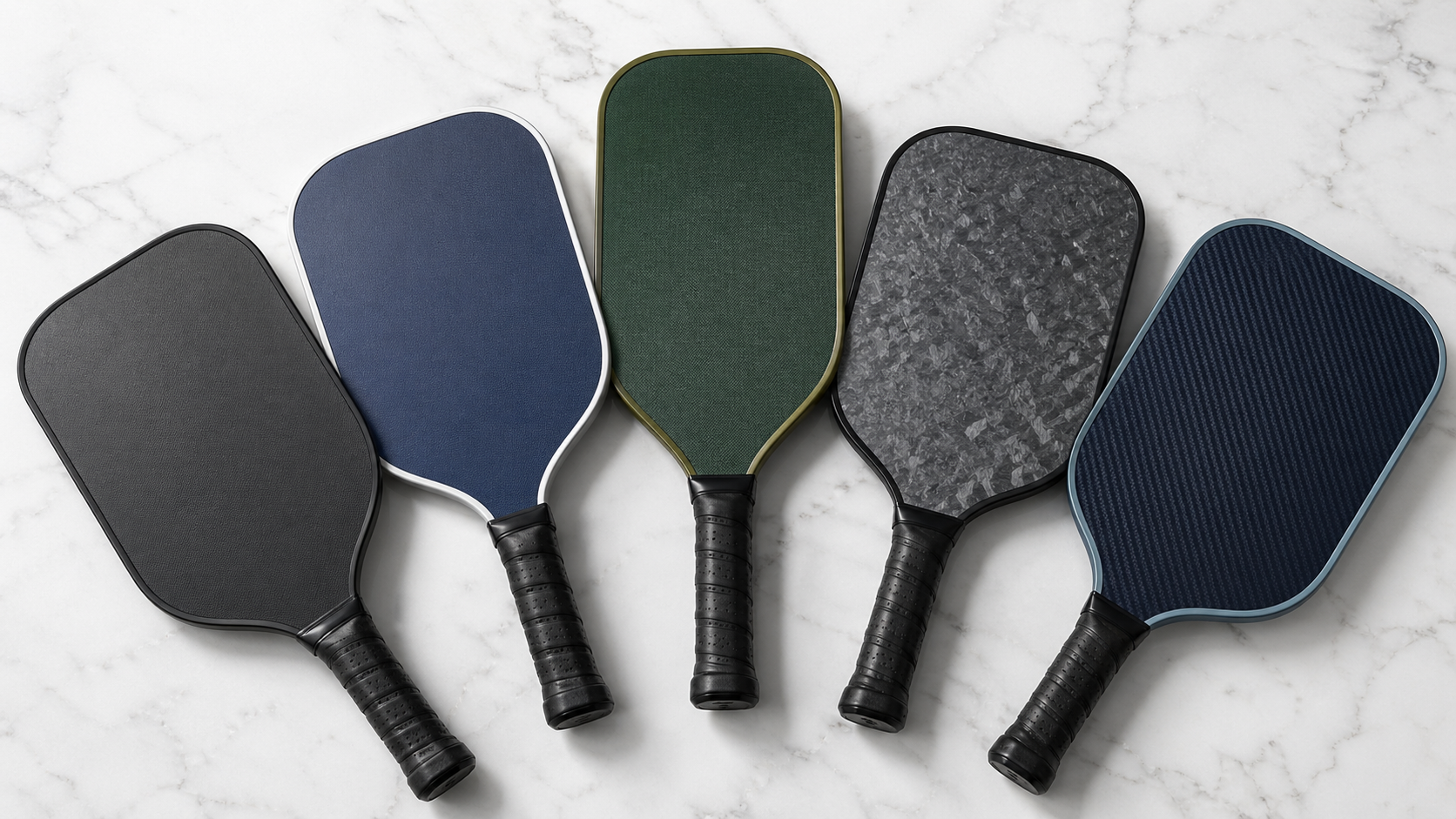
Core Materials — The Heart of Your Paddle
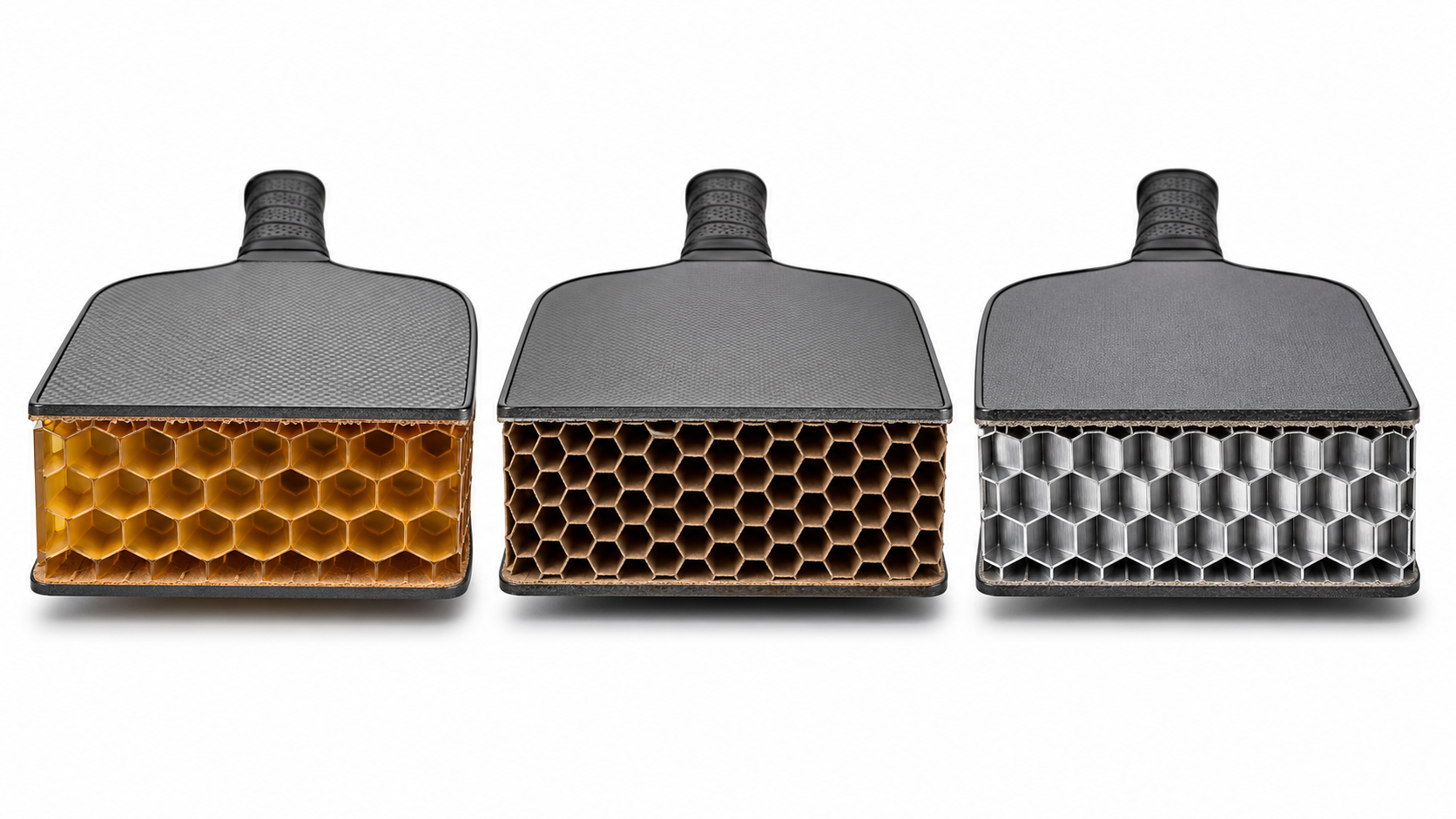
The core is the internal honeycomb structure sandwiched between the two face layers. It determines your paddle's feel, power, control, and noise level. There are three main core materials you will encounter in the Indian market.
Polymer (Polypropylene) Core
Polymer is the most popular core material and the one we recommend for the vast majority of players. It uses a polypropylene honeycomb structure that delivers a soft, controlled feel with good power. Polymer cores are the quietest option — an important consideration if you play in residential areas in Indian cities where noise complaints are common. About 90% of paddles available on Amazon India and Flipkart use polymer cores.
Nomex Core
Nomex is a rigid, aramid fibre-based honeycomb material originally developed for aerospace applications. Nomex cores are hard, loud, and powerful. They provide excellent pop and drive but sacrifice touch and control. The loud "crack" sound when hitting is distinctive. Nomex paddles are less common in India but appeal to aggressive power players. They are not ideal for beginners as they are less forgiving on off-centre hits.
Aluminium Core
Aluminium honeycomb cores are the control specialist's choice. They offer the softest feel and the most precise ball placement. However, they generate the least power — you will need to generate your own pace through swing mechanics. Aluminium cores are also the heaviest. They are rarely found in budget Indian paddles but appear in some mid-range imports.
| Property | Polymer | Nomex | Aluminium |
|---|---|---|---|
| Power | Medium-High | High | Low |
| Control | High | Medium | Very High |
| Touch / Feel | Soft | Hard / Stiff | Very Soft |
| Noise Level | Quiet | Loud | Moderate |
| Durability | Good | Excellent | Good |
| Price (India) | Rs 1,000-15,000 | Rs 3,000-12,000 | Rs 2,500-10,000 |
| Best For | All-round players | Power players | Control / finesse |
| Availability in India | Very Common | Uncommon | Rare |
Our Recommendation
Choose a polymer core for your first paddle. It is the most versatile, widely available in India, and offers the best learning experience. You can always specialise later once you understand your playing style.
Face Materials — What Hits the Ball
The face (or surface) of the paddle is the outer layer that contacts the ball. It determines spin potential, power transfer, and durability. Three materials dominate the market.
Graphite
Graphite faces are thin, lightweight, and responsive. They provide excellent touch and feel, making them ideal for players who prioritise control and soft game (dinking). Graphite paddles are the most popular choice in the mid-price segment in India (Rs 2,000-6,000). The face is typically a single thin layer of graphite composite, which keeps the paddle light but responsive.
Carbon Fibre
Carbon fibre (also marketed as "raw carbon" or "T700/T300 carbon") faces are stiffer and more textured than graphite. The rougher surface generates more spin, which is a significant advantage in competitive play. Carbon fibre paddles tend to have more pop and durability. In India, quality carbon fibre paddles start around Rs 3,500 and can go up to Rs 15,000+ for imported brands like Selkirk or Joola.
Fiberglass (Composite)
Fiberglass faces offer the most power of the three materials. The surface has a slight flex that creates a trampoline effect, generating more ball speed with less effort. Fiberglass paddles are typically the most affordable option and are common in the under-Rs 2,500 segment. They are an excellent choice for beginners who want forgiving power, though they sacrifice some control compared to graphite.
| Property | Graphite | Carbon Fibre | Fiberglass |
|---|---|---|---|
| Power | Medium | Medium-High | High |
| Control | High | High | Medium |
| Spin | Medium | High | Low-Medium |
| Weight Contribution | Light | Light-Medium | Medium |
| Durability | Good | Excellent | Good |
| Price Range (India) | Rs 2,000-8,000 | Rs 3,500-15,000 | Rs 1,000-5,000 |
| Best For | Touch / finesse | Spin / all-round | Power / beginners |
Weight Categories
Paddle weight is one of the most impactful factors in how a paddle plays. It affects power, control, manoeuvrability, and arm fatigue. Paddles are grouped into three weight categories.
| Category | Weight Range | Characteristics | Best For |
|---|---|---|---|
| Lightweight | Under 7.3 oz (207 g) | Quick hands, less fatigue, less power | Seniors, players with joint issues, fast-hands players |
| Midweight | 7.3-8.4 oz (207-238 g) | Balanced power and control | Most players, especially beginners |
| Heavyweight | Over 8.4 oz (238 g) | Maximum power and stability, slower swings | Power players, singles players, former tennis players |
For Indian beginners, we strongly recommend starting in the midweight range (7.3-8.0 oz). If you come from a badminton background, you may be used to much lighter rackets (80-90 g), so even a midweight paddle will feel substantial. Give yourself 2-3 weeks to adapt before judging the weight.
Players from a tennis background often prefer heavier paddles (8.0-8.5 oz) since they are accustomed to racket weights of 280-330 g. The heavier paddle provides stability on volleys and adds natural power to drives.
A useful tip: you can always add weight to a lightweight paddle using lead tape (available for Rs 200-400 on Amazon India), but you cannot remove weight from a heavy paddle. When in doubt, go lighter.
Grip Sizing
Grip circumference affects comfort, control, and injury prevention. Most pickleball paddles sold in India come with a grip circumference between 4 inches and 4.5 inches. Getting the right size matters more than many beginners realise.
How to Measure Your Grip Size
There are two reliable methods:
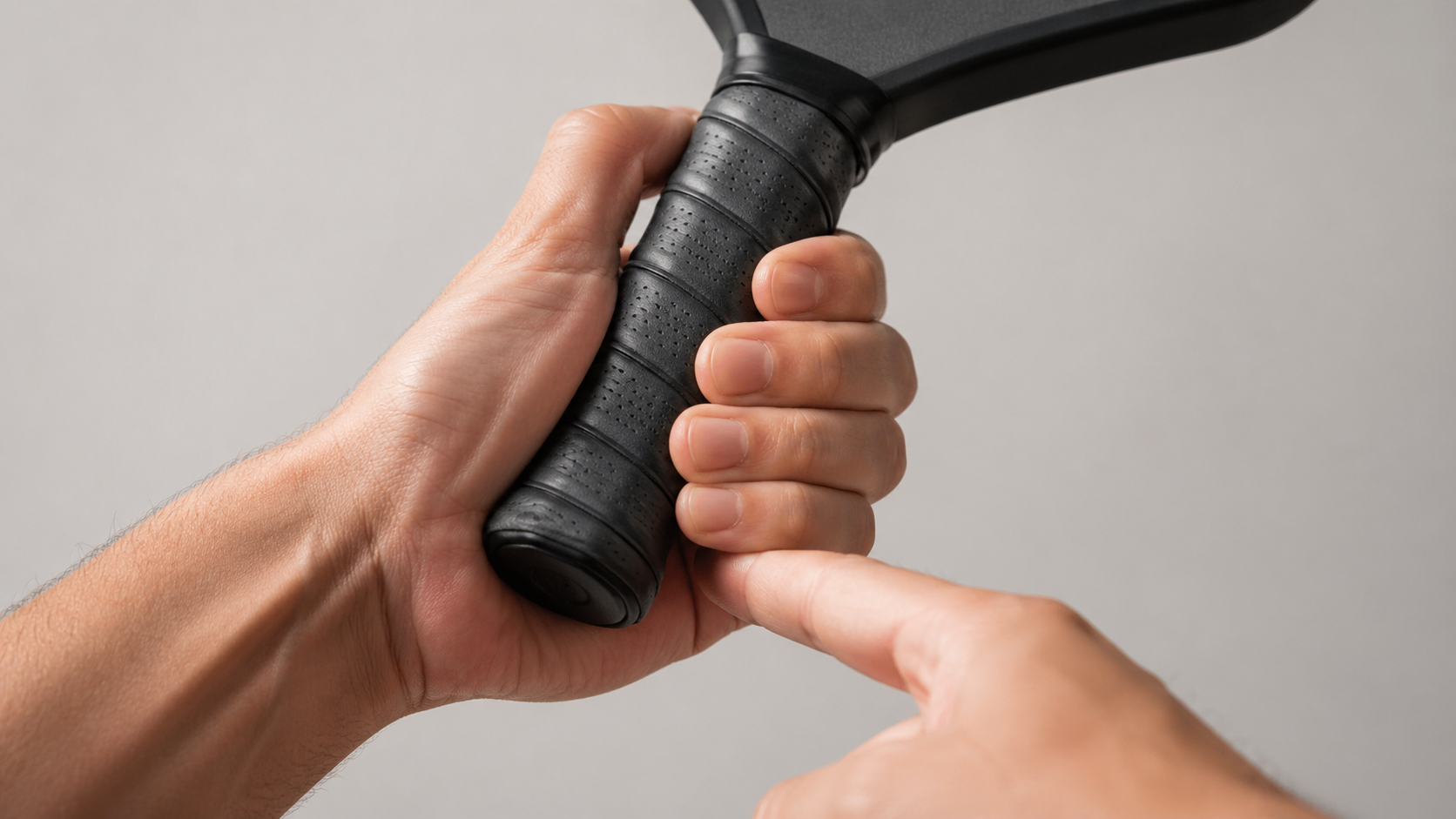
- Index finger test: Hold the paddle in an Eastern grip (like shaking hands with it). If you can comfortably fit the index finger of your other hand between your fingertips and the base of your palm, the grip is correct. Too much space means it is too big; no space means it is too small.
- Ruler method: Measure from the tip of your ring finger to the middle crease of your palm. This measurement in inches corresponds to your ideal grip circumference. Most Indian adults fall between 4.0 and 4.25 inches.
| Hand Size | Grip Circumference | Common For |
|---|---|---|
| Small | 4.0 inches | Women, teens, smaller hands |
| Medium | 4.25 inches | Most Indian adults |
| Large | 4.5 inches | Larger hands |
Pro tip: A slightly smaller grip allows more wrist action, which helps with spin and dinking. A larger grip reduces wrist movement but improves stability on drives. If you are between sizes, choose the smaller option and wrap an overgrip (Rs 100-200) to fine-tune the thickness.
Grip Length
Handle length typically ranges from 4.5 to 5.5 inches. Longer handles (5.25-5.5 inches) allow two-handed backhands and provide more leverage. Shorter handles (4.5-5 inches) shift weight towards the paddle face for more manoeuvrability. If you use a two-handed backhand (common among tennis converts), prioritise a handle length of at least 5.25 inches.
Paddle Shapes
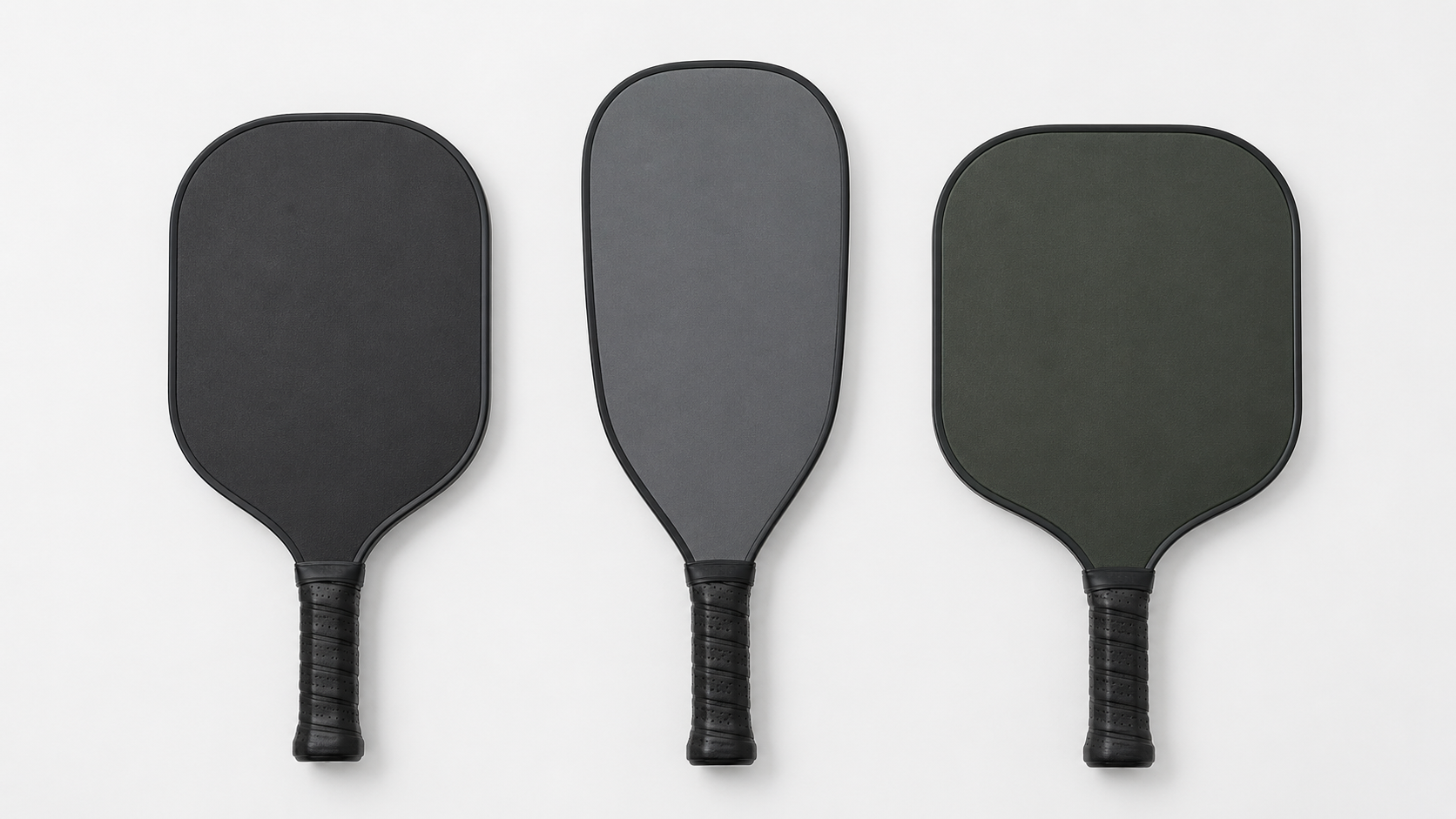
Paddle shape affects reach, sweet spot size, and manoeuvrability. Three primary shapes are available in the Indian market.
Standard / Classic Shape
Dimensions of approximately 15.5-16 inches long by 7.5-8 inches wide. This shape offers the largest sweet spot and is the most forgiving on off-centre hits. We recommend this shape for all beginners. Most paddles under Rs 3,000 in India come in this shape.
Elongated Shape
Dimensions of approximately 16.5 inches long by 7-7.5 inches wide. The extra length provides more reach (useful in singles) and a longer lever arm for generating spin. The tradeoff is a smaller sweet spot and slightly less manoeuvrability at the net. Popular among intermediate and advanced players who have consistent shot-making.
Wide Body Shape
Dimensions of approximately 15.5 inches long by 8-8.25 inches wide. The widest face provides the largest sweet spot of any shape, making it extremely forgiving. However, US regulations cap the combined length plus width at 24 inches, so wider paddles are shorter. This shape is excellent for doubles players focused on kitchen play and blocking.
USAPA Approval — Does It Matter in India?
USA Pickleball (formerly USAPA) maintains an Approved Paddle List that certifies paddles meeting specific standards for dimensions, surface roughness, deflection, and construction. But should Indian players care about this?
When You Need It
- Tournament play: Most AIPA-sanctioned tournaments and state-level competitions in India require USAPA-approved paddles. If you plan to compete, this is non-negotiable.
- Quality assurance: USAPA approval acts as a baseline quality guarantee. Approved paddles must meet specific standards for surface roughness (affects spin), deflection (affects power), and dimensions. Buying an approved paddle ensures you are getting a legitimate product.
- Future-proofing: As pickleball governance in India matures, approved paddles will likely become the standard at all organised levels.
When It Does Not Matter
- Casual / recreational play: If you are playing with friends at a local court and have no tournament ambitions, any decent paddle will do.
- Budget constraints: Many excellent beginner paddles under Rs 2,000 are not on the approved list simply because the manufacturer did not submit them for testing. This does not mean they are bad paddles.
You can check if a paddle is approved on the official USA Pickleball equipment list at usapickleball.org. Look for "USAPA Approved" or "USA Pickleball Approved" markings on the paddle or packaging.
Budget Recommendations for Indian Players
The Indian pickleball paddle market has expanded dramatically, with options at every price point. Here is what to expect at each budget level.
| Budget | What You Get | Best For |
|---|---|---|
| Under Rs 1,000 | Wood or basic composite paddles. Heavy, small sweet spot, no edge guard. Fine for trying the sport once. | One-time casual play |
| Rs 1,000-2,500 | Polymer core, fiberglass or basic graphite face, edge guard. Good for learning. | Beginners |
| Rs 2,500-5,000 | Quality polymer core, graphite or carbon fibre face, better grip, USAPA approved options. | Regular players, club level |
| Rs 5,000-10,000 | Premium construction, raw carbon faces, thermoformed edges, excellent spin and control. | Intermediate, tournament players |
| Rs 10,000+ | Imported premium brands (Selkirk, Joola, CRBN), pro-level technology and materials. | Advanced, competitive players |
We have researched dozens of paddles at each price point. For detailed reviews and specific product recommendations, see our dedicated guides:
Quick Decision Guide
If you want a simple recommendation without reading everything above, here is your checklist:
- Core: Polymer (polypropylene) honeycomb
- Face: Graphite (control) or Fiberglass (power)
- Weight: 7.3-8.0 oz (midweight)
- Shape: Standard (not elongated)
- Budget: Rs 1,500-3,000 for your first paddle
- USAPA: Preferred if you plan to compete, optional otherwise
Related Reads
Pickleball Rules for Beginners in India
Complete rules guide covering court dimensions, scoring, and the kitchen rule.
Best Pickleball Paddles Under Rs 5,000
Our top mid-range picks with detailed reviews and full specs.
Pickleball vs Badminton
Compare both sports — cost, fitness, learning curve, and availability in India.