Pickleball vs Tennis — Cost, Fitness, and Fun Compared
Two racket sports, very different vibes. Whether you're picking up your first paddle or wondering if pickleball is worth switching from tennis, this in-depth comparison covers everything from equipment costs to fitness benefits — all in the Indian context.
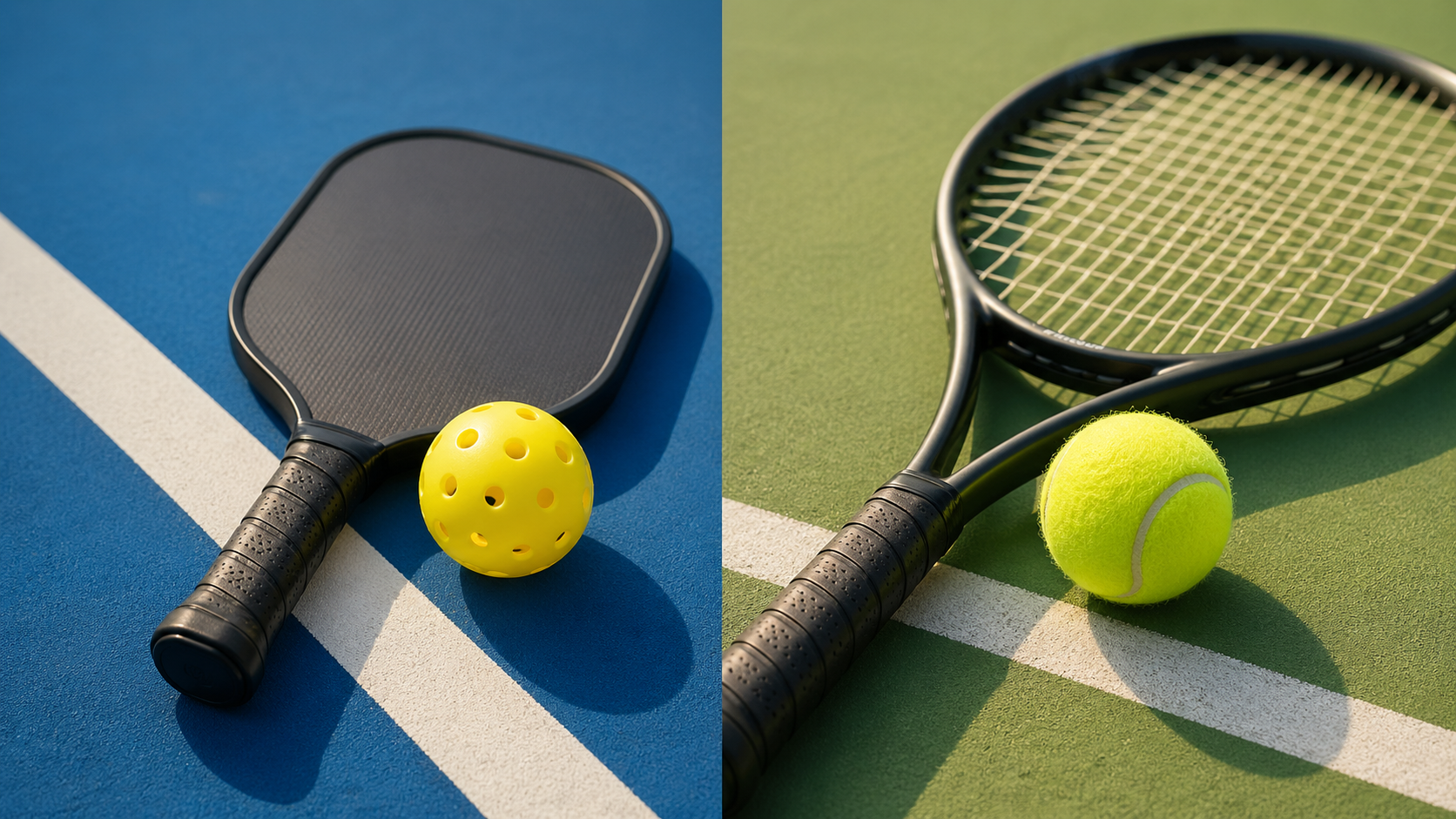
Sport Overview
Pickleball
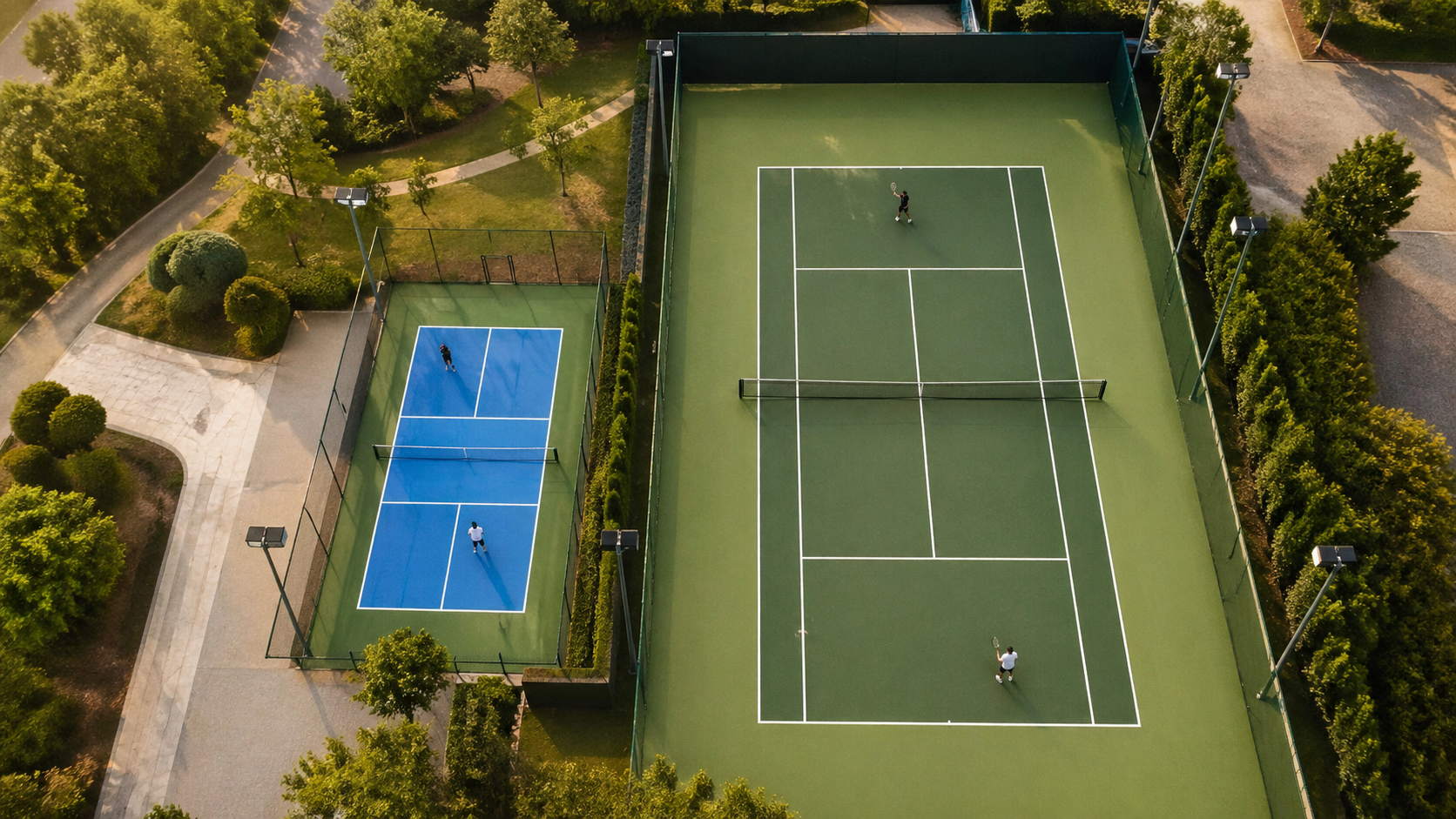
Pickleball combines elements of tennis, badminton, and table tennis on a smaller court (20x44 feet for doubles). Players use solid paddles to hit a perforated polymer ball over a 34-inch net. The non-volley zone (the "kitchen") creates a unique tactical dimension. Games are played to 11 points, win by 2.
In India, pickleball has seen explosive growth since 2018. The AIPA (All India Pickleball Association) organises national championships, and cities like Bangalore and Mumbai have dedicated pickleball facilities. The sport attracts a wide age range — from college students to retirees — thanks to its gentle learning curve and social format.
Tennis
Tennis needs no introduction. Played on a 78x36-foot court (doubles), it's one of the world's most established sports. Players use strung rackets to hit a pressurised felt ball over a 36-inch net. Scoring uses the traditional love-15-30-40 system, with sets and tiebreaks.
India has a strong tennis tradition, from Ramanathan Krishnan to Sania Mirza to the current Davis Cup squad. Tennis courts are available in most Indian cities through clubs, public facilities, and residential complexes. The AITA (All India Tennis Association) oversees competitive play at all levels.
Equipment Cost Comparison (INR)
One of the biggest factors for anyone starting a new sport. Here's what you'll spend to get started and maintain each sport in India.
| Item | Pickleball (Rs) | Tennis (Rs) | Notes |
|---|---|---|---|
| Beginner racket/paddle | 1,500 – 3,000 | 2,000 – 5,000 | Tennis rackets need stringing |
| Intermediate racket/paddle | 3,000 – 8,000 | 5,000 – 15,000 | Tennis restringing costs Rs 300-800/session |
| Balls (per dozen) | 1,200 – 2,400 | 1,500 – 4,000 | Pickleballs last longer than pressurised tennis balls |
| Shoes | 2,000 – 5,000 | 3,000 – 8,000 | Tennis shoes need more lateral support |
| Court fees (per hour) | 0 – 500 | 200 – 1,000 | Many pickleball courts are free |
| Coaching (per month) | 2,000 – 5,000 | 3,000 – 10,000 | Tennis coaching more established |
| Total startup cost | ~5,000 – 10,000 | ~8,000 – 20,000 | Pickleball is 40-50% cheaper to start |
The cost difference is substantial, especially at the entry level. Pickleball's lower startup cost is a major reason it's attracting new players in India — particularly those who might find tennis intimidating or expensive to begin.
Court Availability in India
Tennis: Well-established court infrastructure. Most cities have public and club tennis courts. DLTA in Delhi, KSLTA in Bangalore, CCI in Mumbai, and SDAT in Chennai are prominent venues. Residential complexes in metro cities increasingly include tennis courts. However, prime-time slots are often booked out, and club memberships can be expensive (Rs 10,000–Rs 1,00,000 annually depending on the city and club).
Pickleball: Dedicated pickleball courts are still relatively rare, but the situation is improving rapidly. Bangalore leads with venues like Pickle Social Club, Pickleball Zone, and numerous converted tennis courts. Mumbai, Delhi-NCR, Hyderabad, and Pune all have active communities with regular playing sessions. Many players set up temporary courts in parks, parking lots, or on badminton courts — the small footprint (you can fit four pickleball courts on a single tennis court) makes this practical.
If you live in a metro city, both sports are accessible. In tier-2 and tier-3 cities, tennis courts are more commonly available, but pickleball communities are forming fast via WhatsApp groups and social media.
Fitness and Physical Demands
| Factor | Pickleball | Tennis |
|---|---|---|
| Calories burned/hour | 250–400 | 400–600 |
| Running distance/match | Low–Medium | High |
| Joint impact | Low | Medium–High |
| Upper body demand | Moderate | High |
| Injury risk | Low | Moderate |
| Typical session length | 60–120 minutes | 60–90 minutes |
Tennis is the more physically demanding sport. The larger court requires more running, the heavier racket and faster ball demand more upper body strength, and the impact forces on knees and ankles are significantly higher — particularly on hard courts, which dominate in India. Common tennis injuries include tennis elbow, shoulder impingement, and knee strain.
Pickleball is gentler on the body. The smaller court reduces running, the lighter paddle minimises arm strain, and the slower ball speed gives more reaction time. However, the quick lateral movements can still challenge knees, and the bent-over posture at the kitchen line can cause lower back discomfort over long sessions.
For pure fitness, tennis wins. For sustainable, low-impact exercise that you can maintain for decades, pickleball has the edge — especially in India's hot climate where a 90-minute tennis session can be brutal during summer months.
Learning Curve
Pickleball: You can play a competent game within 1-2 sessions. The basic skills — dinking, serving underhand, volleying — are intuitive for anyone who has held a racket or paddle before. The strategic depth (kitchen play, third-shot drops, stacking) takes months to develop, but you'll be having fun immediately. Most Indian pickleball communities are beginner-friendly and will teach you informally.
Tennis: Expect 2-4 weeks of regular coaching before you can sustain a rally. The serve alone is a complex motion that takes months to groove. Topspin, slice, and net play add layers of technical difficulty. Tennis rewards patience and practice — the journey from beginner to intermediate is longer but deeply satisfying. Professional coaching, which is widely available in Indian cities, significantly accelerates the learning process.
Social Aspect
This is where pickleball truly shines. The doubles format is inherently social — four players chatting between points, rotating partners, sharing laughs. Indian pickleball communities are famously welcoming, with many groups organising weekly meetups that function as much as social gatherings as athletic events. The sport attracts families, corporate groups, and friend circles.
Tennis has a strong social tradition too — the club culture, post-match chai, weekend mixed doubles — but it's inherently more competitive and isolated. Singles tennis can feel lonely. Doubles tennis is social but requires a higher collective skill level for an enjoyable game. Tennis clubs in India also carry a certain exclusivity that can be off-putting for newcomers.
Age Suitability
Children (6-15): Tennis is the better developmental choice. The technical complexity builds coordination, discipline, and athletic skills. Junior tennis programmes are well-established in India, and the competitive pathway (AITA rankings, state championships) is clear. Pickleball is fun for kids but lacks structured developmental pathways in India so far.
Young adults (16-35): Either sport works beautifully. Choose based on personality — tennis for competitive intensity, pickleball for social fun. Many young Indians play both.
Middle age (35-55): This is pickleball's sweet spot. Lower injury risk, easier on the body, and the social format is ideal for busy professionals looking for an active hobby. Tennis is great if you already play, but starting from scratch at 45 is challenging.
Seniors (55+): Pickleball is strongly recommended. The reduced physical demands make it sustainable, and the community aspect provides valuable social engagement. Many Indian senior communities and residential complexes are adding pickleball facilities for this reason.
Our Verdict
Choose pickleball if: You want a social, accessible sport that's easy to learn, gentle on your body, and affordable to start. It's perfect for families, beginners over 35, and anyone who values community and fun over intense competition.
Choose tennis if: You want a deeper technical challenge, a more intense physical workout, and a sport with a long competitive tradition. Tennis is ideal for children developing athletic skills, competitive-minded adults, and anyone who enjoys mastering a complex craft.
Bottom line: These are complementary, not competing sports. Many Indian players enjoy both. If forced to pick one, let your age, fitness level, budget, and social preferences guide you. Neither choice is wrong — any racket sport that gets you moving and smiling is the right one.